1 Overview
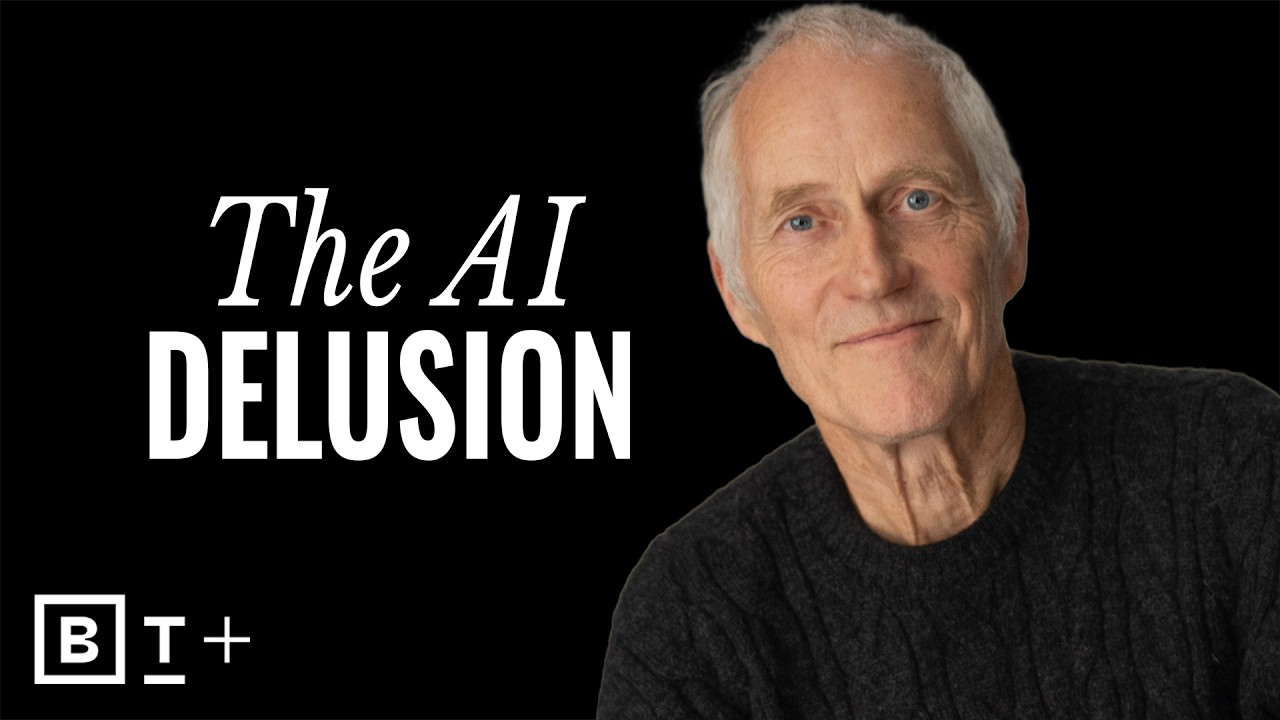
Tim O'Reilly — the man who helped define "open source" and coined "Web 2.0" — delivers a sharp critique of the AI industry's trajectory. His central thesis: today's economy is dominated by companies that extract more value than they create, and AI is poised to accelerate this trend rather than reverse it. The talk weaves together enshittification, shareholder primacy, Industrial Revolution history, and a pointed comparison of AI hype to religious prophecy, ultimately arguing that the future is a choice, not an inevitability.
2 The Value Extraction Problem
O'Reilly opens with a fundamental litmus test for companies: a great company is one that has great products, is loved by its customers, its employees, and its suppliers. The fact that companies possessing none of those qualities can be valued enormously is, in his words, "a sad commentary on our society."
For business leaders, the central question should always be: Is the value I provide to my customers greater or lesser than it was yesterday? In a successful business, you're always providing more value. The moment you start taking value away — raising prices without adding utility, degrading the product to boost margins — you've stepped onto a destructive path.
3 Enshittification in Action
O'Reilly uses Cory Doctorow's concept of enshittification to describe the lifecycle of modern tech services: a product starts out great, attracts users with genuine value, then gradually degrades once the company decides it's "entitled" to extract more from its captive user base.
Instagram — The Textbook Case
O'Reilly personally experienced this arc with Instagram. He started using it to follow his grandkids — "a wonderful use case that attracts you to the platform." Then Meta decided to take away that functionality, make it harder to find, and instead push Reels and algorithmically ranked content optimized for ad revenue, not user satisfaction.
Amazon — Research-Backed Evidence
Once a service designed to help you find the best product at the lowest price, Amazon now makes most of its money from advertising. O'Reilly cites his research with colleagues at University College London: Amazon's ad-promoted products are ranked roughly a third lower in quality and are 17% more expensive than organic results. That's textbook value extraction — the company is making money by making the user experience worse.
4 Silicon Valley's Wrong Turn
O'Reilly speaks with the authority of someone who shaped the industry's vocabulary: "In my industry — the industry of Silicon Valley — we took a wrong turn somewhere along the way."
The guiding light of technology for many years was a principle O'Reilly himself popularized: "Create more value than you capture." As industries mature, however, companies inevitably turn from value creation to value capture. It's a pattern he sees as characteristic of late-stage industry — companies stop innovating and start squeezing.
- Early stage — Companies compete by delighting users with genuinely useful products
- Growth stage — Innovation drives competitive advantage; value creation is the engine
- Late stage — Innovation slows; companies pivot to extracting value from the users they've already locked in
5 AI's Predictable Extraction Trajectory
O'Reilly turns the lens on the current AI moment. Right now, AI companies are in the "attract users" phase — offering enormous value propositions, often below cost, racing for market share. But given the historical arc, O'Reilly predicts their next move is predictable:
Once AI companies lock in their competitive positions and stop attracting new users through innovation, they will begin the familiar descent into value extraction:
- Lock-in — Making it harder to switch to alternatives
- Higher prices — Raising costs once competition is eliminated
- Worse results — Degrading output quality to save compute costs
- Attention hijacking — Showing users things they didn't want to see, optimized for the company's revenue, not the user's needs
The counterpoint is clear: a great company continues to innovate to make new things valuable for their customers, rather than saying "we can't innovate anymore, so we just got to extract more value from the customers we have."
6 The Shareholder Primacy Trap
O'Reilly traces the root of value extraction to an intellectual framework: shareholder primacy, established by Milton Friedman and formalized by Jensen and Meckling at Harvard. The idea that a company's sole obligation is to maximize shareholder returns has become, in O'Reilly's view, "a really pernicious idea."
Friedman's original argument was that profits returned to shareholders would be voluntarily redistributed toward social causes. O'Reilly's blunt assessment: "Of course, they don't" — drawing laughter from the audience.
The downstream effects of this extractive ideology:
- Squeezing customers — "Anything goes if you can squeeze another nickel out"
- Squeezing employees — Suppressing wages even as productivity increases
- Externalizing costs — Passing costs to society rather than internalizing them
When the number one metric is stock price, driven by profitability and growth rates, "then you've built a recipe for a very inhuman society."
Meanwhile, the productivity gains from AI could result in higher salaries, shorter working hours, or lower consumer prices — but they won't, as long as the overwhelming logic dictates that shareholders are the only constituency that matters.
7 Industrial Revolution Parallels
O'Reilly draws direct parallels between the AI revolution and the first Industrial Revolution, where all profits went to mill owners while workers were immiserated. Society eventually realized it could do better: ending child labor, abolishing slavery, reducing working hours.
The Henry Ford Example
Even Henry Ford — "not a humanitarian" — realized that sharing productivity gains created a virtuous circle: by paying workers enough to afford his products and giving them free time to enjoy them, he created his own customer base. The assembly line's productivity gains were shared, and everyone benefited.
O'Reilly's core argument: productivity is a good thing — the question is how we choose to share it and circulate it. Today's AI productivity gains face the same choice the Industrial Revolution faced, and history shows that hoarding those gains leads to revolution.
8 AI Superintelligence as Religious Belief
O'Reilly delivers the talk's most incisive critique. He finds the thinking of AI companies about superintelligence fundamentally hollow: "They're going to get to superintelligence, which will do everything. How does it actually work? What's your business model? How does the money circulate in this thing?"
His assessment is withering: "They don't really have any idea. It's really more like a religious belief in the second coming."
He follows the logic to its uncomfortable conclusion:
- Thesis: AI replaces human workers, making businesses more productive
- Implication: The only customers will be people who already have capital
- Everyone else becomes "human waste"
- "What are you going to do with that human waste? They're going to revolt. Did you learn nothing from the French Revolution?"
9 Market Humanism — A Third Way
O'Reilly acknowledges the failure of both extremes. Pure capitalism concentrates all rewards with capital owners. The communist ideal of total equality goes "against human nature" and simply reinvents power structures. But there's another path.
He cites his friend Nick Hanauer's concept of market humanism: markets work, exchange works, but there are ways to design markets that are focused on creating human flourishing rather than creating extractive opportunities for a small number of people.
The key insight: it's not about choosing between capitalism and socialism. It's about designing market systems that structurally distribute value rather than concentrate it.
10 Architecture of Participation
O'Reilly closes with a concept he's spent decades developing: the architecture of participation. This is the idea that design choices in technology and markets determine who gets to participate in the value they create.
Historical examples:
- The web beat other networking models because its open architecture let more people participate
- Open source beat proprietary software in many domains because its design enabled broad participation in the software economy
The challenge for AI: we are currently trying to invent the architecture of participation — the circulatory economy for human value in the face of AI. The patterns exist: winner-takes-all monopoly vs. ecosystems where many participants can win. The choice between these architectures will determine whether the AI economy is inclusive or dystopian.
✦ Key Takeaways
🔑 Key Takeaways
- Value extraction is the defining disease of late-stage tech — companies that once delighted users pivot to squeezing them once innovation slows and competitive positions are locked in
- Enshittification follows a predictable arc — attract users with genuine value → acquire dominance → degrade the product to extract more revenue (Instagram, Amazon are textbook cases)
- AI companies are currently in the "attract" phase — offering enormous value below cost, but the historical pattern predicts they will follow the same extraction trajectory once competition narrows
- Amazon's ad-promoted products are a third lower in quality and 17% more expensive — peer-reviewed research from UCL demonstrates the real cost of value extraction to consumers
- Shareholder primacy is the intellectual root of extraction — Milton Friedman's theory assumed profits returned to owners would be redistributed; in practice, they never are
- AI productivity gains could fund higher wages, shorter hours, or lower prices — but won't, as long as stock price is the only metric that matters
- AI superintelligence hype resembles religious prophecy — no coherent business model for how money circulates in a world where AI does everything; "more like a religious belief in the second coming"
- Replacing all human workers creates an impossible economy — if only capital owners are customers, there's no circulation of value, leading inevitably to revolt (French Revolution parallel)
- Market humanism offers a third way — neither pure capitalism nor communism, but market systems designed to create human flourishing rather than extractive opportunities
- The architecture of participation determines who benefits — the web and open source won because their designs enabled broad participation; AI needs the same intentional design
- The future is a choice, not an inevitability — technology doesn't determine outcomes; the ideas we hold about what matters in society shape how productivity gains are distributed
🔗 Resources & Links
- O'Reilly Media — Tim O'Reilly's publishing and technology company
- Cory Doctorow on Enshittification — The original concept referenced throughout the talk
- Nick Hanauer — Venture capitalist and author of the "market humanism" framework cited by O'Reilly