Overview
AI Search reviews GLM 5.2, the latest model from Z.AI that has taken the #1 spot on multiple open-source benchmarks — and in some cases beats GPT 5.5 and Gemini 3.1 Pro while edging close to Claude Opus 4.8. The video is packed with hands-on demos: building an interactive 3D digital Earth, creating a promo video with AI voiceover, generating 3D mechanical models (V8 engine, watch), coding a ray tracing simulation from scratch, composing music via a DAW interface, creating Manim math animations, and running deep research queries. Along the way, the reviewer shows how to use GLM 5.2 in Z.AI's own ZCode IDE, in Claude Code (by swapping the default model), or in any agentic harness like OpenClaw or Hermes. The video closes with benchmark analysis showing GLM 5.2's performance across Frontier Suite, SWE-Bench Pro, Terminal Bench, Deep Suite, and Humanity's Last Exam, plus a discussion of the model's architecture innovations (Index Share, improved MTP) and the strategic value of open-source AI.
1 Where to Use GLM 5.2
There are several ways to access GLM 5.2:
- Online chat interface — free at
chat.z.ai, select GLM 5.2 at the top. Good for simple tasks but "doesn't do it justice" for frontier-class work - ZCode — Z.AI's own agentic IDE (free download for Mac, Windows, Linux). Essentially a Codex clone with multi-project support, multi-file editing, and thinking mode. This is where the reviewer runs most demos
- Claude Code / Codex / OpenClaw / Hermes — GLM 5.2 can be plugged into any agentic harness as a drop-in model replacement (covered in detail in Section 5)
2 Interactive 3D Digital Earth
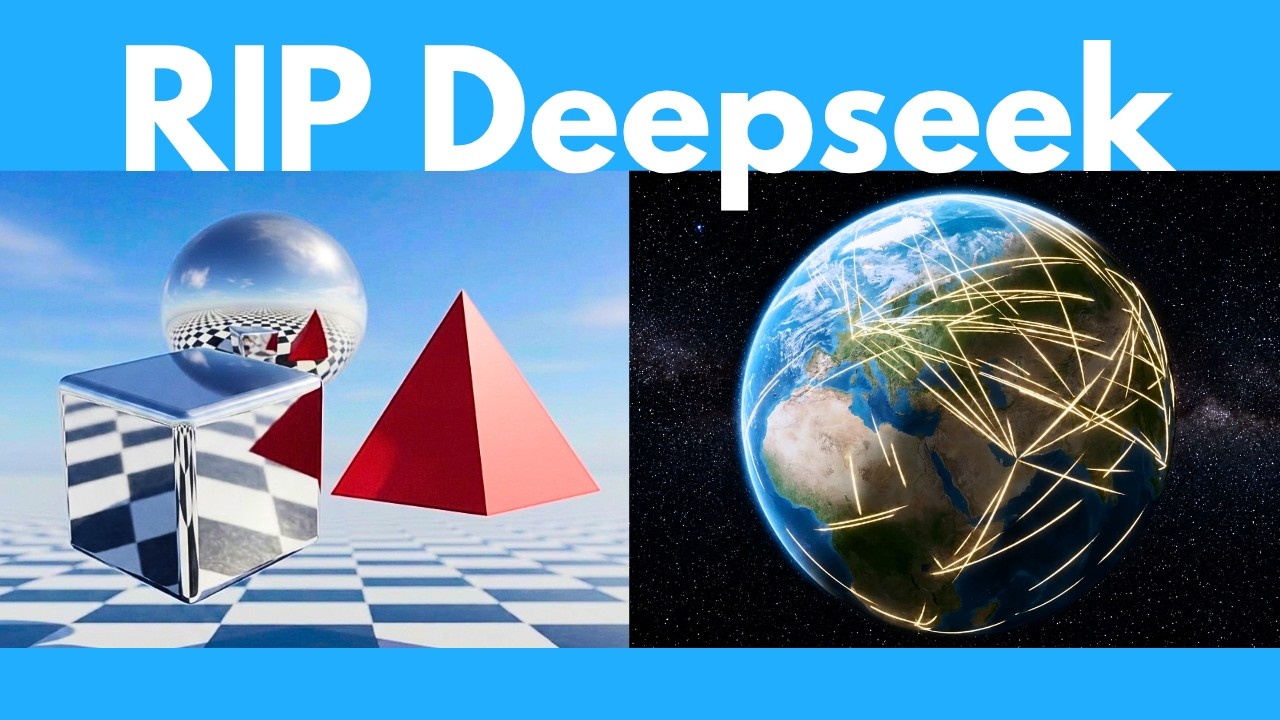
The first test is an extremely challenging prompt: build an interactive 3D digital twin of Earth in a single HTML file with these features:
- Zoom seamlessly from outer space down to individual city streets
- Hover over cities → highlight country borders + popup with area, population, GDP
- Toggles for atmospheric cloud cover, flight traffic, day/night terminator, night city lights
- Load efficiently in a regular web browser
Results
- Initial prototype — worked but cloud cover and country borders were broken
- After follow-up prompts — flight traffic animated with path streaks, country stats popup working, day/night terminator working, night city lights working, zoom to individual cities (New York, Tokyo) with street-level detail
- Still broken — cloud cover overlay didn't render properly
- Total time — ~15 minutes with additional prompting
For comparison, Claude Fable 5 (currently banned and unusable) could do this in one prompt. But for an open-source model, this is extremely impressive.
3 Animated Promo Video with AI Voiceover
This test combines multiple tools at once — closer to a real everyday workflow:
- Input — a product page (Wise landing page), Gemini TTS for voiceover, the HyperFrames GitHub repo for animation, background music track, 16:9 aspect ratio, ~1 minute long
- No explicit installation instructions — the model had to figure out how to install HyperFrames from the GitHub repo on its own
- Result — a complete promo video with voiceover, background music, and animated visuals. Zero follow-up prompts needed
- Stats — ~100k tokens used, ~20 minutes to complete
4 3D Model Generation
V8 Engine
- Prompt — animated 3D V8 engine with exploded view slider showing pistons, spark plugs, valves, connecting rods, crankshaft in motion. Single HTML file
- Result — fully working in one prompt, 13 minutes. Smooth explosion animation, adjustable engine speed slider
- Stats — only 28k tokens, 96% cache hit rate
Mechanical Watch (harder)
- Prompt — 3D animated traditional mechanical watch with inner workings: dials, hands, hour markers, gears turning, balance wheel oscillating. Even Claude Fable 5 couldn't get this fully correct
- Result — hit one error (fixed by pasting error back), then the reviewer asked for exploded view with layer toggles. Working clock with correct minute/hour/second hands and time scale. Sapphire crystal, hands, dials, and case layers all togglable
- Limitation — when zooming into inner gears, some weren't moving and alignment was off. An "incredibly challenging prompt" — neither GLM 5.2 nor Claude Fable 5 got it 100%
- Stats — ~80k tokens, ~94% cache hit rate
5 Using GLM 5.2 in Claude Code
GLM 5.2 can be used as a drop-in replacement for Claude models inside Claude Code, Codex, or any other agentic harness. The setup process:
- Sign up for a Z.AI plan and get an API key
- Install the Z.AI coding helper — a CLI tool that configures your agentic platform
- Run the CLI — input your API key, select "Claude Code" as the platform, let it configure
- Edit
claude_settings.json— in your user folder, add 4 lines to the environment field that map haiku/sonnet/opus to GLM model variants - Restart Claude Code — typing
/modelnow shows GLM models instead of Claude defaults
6 Ray Tracing Simulation from Scratch
The key constraint: no Three.js or external libraries. The model had to implement ray tracing physics and lighting completely from scratch in a single HTML file.
- Prompt — one sphere, one cube, one pyramid; blue sky with checkered ground; adjustable position, reflectivity, roughness, transparency, and other material properties per shape
- Result — fully working in one prompt (~20 minutes). The model even spun up a local server and took a screenshot to verify the output
Physics accuracy verified
The reviewer methodically tested every property:
- Sphere — reflectivity slider (non-reflective ↔ mirror), roughness (diffuse ↔ polished), transparency (opaque ↔ fully transparent), IOR (index of refraction), emission (light source)
- Cube — position, size, color, reflectivity all working correctly
- Pyramid — same controls, all functional
- Scene controls — sun azimuth/elevation/intensity, ambient light, light color, sky color, checkered ground color/scale/reflectivity, camera distance/height
- Physics test — transparent sphere shows no reflections (correct), reflective cube shows reflections of sphere and pyramid (correct), opaque pyramid casts proper shadows (correct)
7 Music Composition via DAW Interface
A two-stage test of musical capability:
Stage 1: Build the DAW
- Create a web-based DAW with instruments: piano, synth, pluck, strings, drums, bass
- Piano roll interface with drag-and-drop notes, pan/volume per track, play/pause
- Result — completed in one prompt, no follow-up needed (previous GLM versions could also do this)
Stage 2: Compose a song
- Prompt: "a powerful expressive 32-bar song rich in complexity that would win a Grammy" with effects, automation, proper panning, mastering
- Result (8 min 23 sec) — composed a full song with intro, verse, pre-chorus, chorus arc. Added reverb and delay effects
- Limitations — didn't auto-pan tracks, didn't add automation across tracks, overall still quite basic
- Performance similar to Claude Fable 5's output on the same test
8 Manim Math Animation
- Prompt — create a Manim animation where Fourier circles draw a butterfly using rotating circles connected by vector arms. Save as MP4
- Extra challenge — Manim was not installed; the model had to figure out how to install Manim, NumPy, SciPy, and all dependencies itself
- Self-verification — the model used its built-in image analysis tool to verify that frames actually contained a butterfly, and caught bugs along the way
- After a follow-up prompt for sharper wings and brighter circle outlines, the final animation used 12 Fourier circles building up progressively more detail
- Total time — ~22 minutes (including rendering time)
9 Deep Research Capabilities
Tested on a medical research prompt about molecular drivers of a specific type of leukemia, with deep think + max + advanced search enabled:
- Structured output — intro paragraph, organized sections, nice tables for drug comparisons
- Visualizations — coded a flowchart for oncogenic signaling pathways, a timeline for evolution of targeted therapy, a web chart for resistance mechanisms
- Thorough tables — drug features, toxicities, comparative resistance profiles by mechanism class, survival outcomes with charts
- Style — "no BS, very short and to the point" while still going "super in-depth"
Vision limitation
GLM 5.2 does not have native vision capabilities (unlike competitor MiniMax M3 which is multimodal). It can use external vision tools to analyze images, but native image understanding is absent. The reviewer's classic "find the hidden frog" test failed — the model used an external VLM but couldn't locate the frog correctly.
10 Specs & Benchmarks
Model specs
- Context window — 1 million tokens (~700,000 words or a small-to-medium codebase)
- License — MIT (very permissive)
- Parameters — 753 billion (smaller than DeepSeek V4's 1T+, but still 1.51 TB on disk)
- Open weights — available on Hugging Face
Benchmark results
- Frontier Suite & Post Train Bench (long autonomous coding) — beats GPT 5.5 and Gemini 3.1 Pro by a huge margin; edges very close to Claude Opus 4.8
- SWE-Bench Pro — beats best GPT and Gemini, close to best Claude
- Terminal Bench — same pattern
- Deep Suite (claimed more accurate SWE measure) — GLM 5.2 scores 46.2, by far the highest-scoring open model on the official leaderboard
- Humanity's Last Exam (obscure scientific knowledge) — beats best GPT and best Gemini
- Frontier leaderboard — Opus 4.8 level across most categories, beats GPT 5.5
- Front-end & design — beats Opus 4.8 on front-end coding benchmarks; beats Claude Fable 5 on Design Arena leaderboard
- RuneScape Bench (game-playing AI) — by far the best open model, with other open models far behind
Architecture innovations
- Index Share — reuses the same indexer across sparse attention layers, reducing compute by 2.9×
- Improved MTP layer — increases decoding length by up to 20%, improving generation efficiency
11 Open Source & Why It Matters
The reviewer closes with a strong case for why open-source models like GLM 5.2 matter:
- Sovereignty — closed labs like Anthropic "constantly gatekeep their models" and intentionally limit capabilities for certain use cases. The US government has banned the latest Claude model. With open models (GLM, DeepSeek, Qwen), you don't depend on any closed-source lab
- Privacy — closed models send data to external servers. If you host GLM locally/on-prem, your sensitive data (legal, medical, government, financial) stays where you control it
- Community building — open weights mean the community can fine-tune, extend, and improve the model. "The community builds on top of this"
- Practical caveat — at 1.51 TB, you need a data center to run this locally. Not for consumer devices. But cloud hosting and API access make it usable for anyone
🎯 Key Takeaways
🔑 Key Takeaways
- GLM 5.2 is the new #1 open-source model — beating GPT 5.5 and Gemini 3.1 Pro on multiple benchmarks, and edging close to Claude Opus 4.8 on autonomous coding tasks
- Minimal handholding required — the model consistently works "right out of the box" with few errors; most demos needed zero or one follow-up prompt
- Use it in agentic harnesses, not just chat — GLM 5.2's full potential emerges in ZCode, Claude Code, OpenClaw, or Hermes where it can use tools and execute multi-step workflows
- Drop-in Claude Code replacement — install the Z.AI coding helper, configure settings.json, and Claude Code runs on GLM instead of Claude models
- Impressive 3D/physics capabilities — ray tracing from scratch without libraries, working V8 engine with exploded view, mechanical watch with togglable layers
- Multi-tool orchestration — created a promo video combining web scraping, Gemini TTS voiceover, HyperFrames animation, and audio mixing in a single zero-shot prompt
- 1M token context window — supports ~700k words or a full codebase; MIT licensed and fully open weights on Hugging Face
- 753B parameters, 1.51 TB — smaller than DeepSeek V4 but still requires serious hardware; not for consumer devices
- Architecture innovations — Index Share (2.9× compute reduction) and improved MTP (20% longer decoding) enable frontier performance at lower cost
- No native vision — unlike multimodal competitors (MiniMax M3), GLM 5.2 relies on external tools for image understanding
- Front-end coding champion — beats even Opus 4.8 and Claude Fable 5 on front-end/design leaderboards (Frontier, Design Arena)
- Open source as strategic necessity — with Claude Fable 5 banned and closed labs gatekeeping capabilities, open models provide sovereignty, privacy, and community extensibility
🔗 Resources & Links
- GLM 5.2 Online Chat — free chat interface to try GLM 5.2
- ZCode — Z.AI's agentic IDE (Codex-style) for Mac, Windows, and Linux
- Z.AI DevPack Quick Start — how to connect GLM to Claude Code or other harnesses