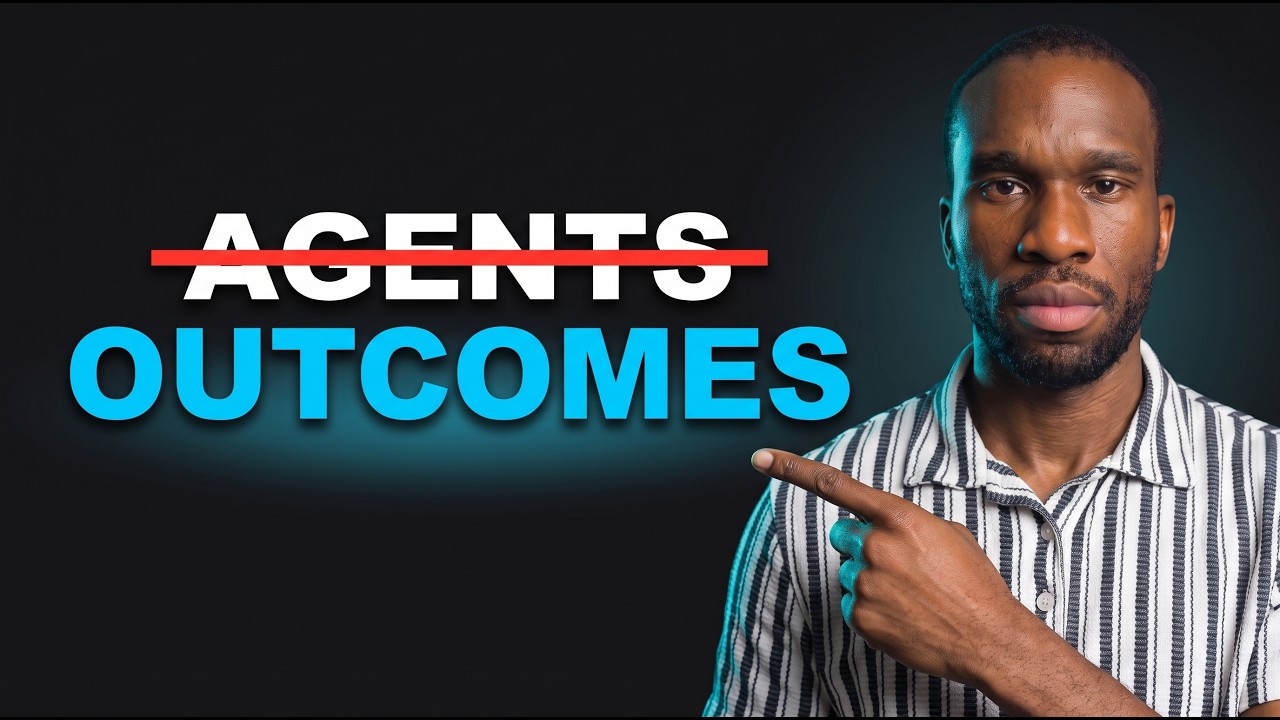
📌 What was built and why it failed 0:00
The product was a deal-sourcing platform for private equity firms. A user entered an investment thesis in natural language — "we want mid-market manufacturing companies with EBITDA over $2M in the Midwest" — and the platform routed LLMs across company data sources, translated the thesis into a search, and returned matching businesses. It was a full self-service SaaS: payment integration, credits, teams, organisations. A few dozen users ran their real investment theses through it.
The product worked. "In essence, problem solved." It identified companies that matched the thesis. It returned nothing.
brainqub3.com) is a real company — HTTP 200. The presenter states he has been delivering custom software and agents for three and a half years. The platform description is specific: PitchBook on one side as the raw data provider, brokers on the other side as the human service layer, and his platform positioned in the middle as the automated discovery layer. The competitive landscape is recognisable to anyone in private equity.🔍 The gap between identification and acquisition 6:20
The platform identified companies. It did not help anyone acquire one. Between identification and acquisition lies:
- Owner outreach. Somebody has to call the owner and ask whether they would entertain an offer. "This is a very human process. This is a negotiation."
- Due diligence. Inspecting the data room — the documents the seller provides for verification. Largely manual.
- Debt financing. If the buyer is raising debt, somebody has to build the case for the bank. "Our solution didn't solve that problem either."
⚡ The weekend that beat six months 14:44
| 6-month platform | Weekend rebuild | |
|---|---|---|
| Architecture | Custom routing, custom orchestration, payment, credits, teams, SaaS | Claude Code + Skills + data source connectors |
| Customer experience | Self-service platform with login, credits, dashboard | Direct results sent to the customer — no platform at all |
| Customer feedback | Good, constructive. Used it. | "Superior to the platform." Asked for more. |
| Technical debt | Accumulated — bugs, customer queries, platform maintenance | None |
That sentence is the architectural version of the outcome failure. He built for the technology that existed; the technology improved; his platform became redundant; a weekend with the new tools outperformed it.
📋 The three lessons
1. Service first, platform second 12:00
2. Aim at the true outcome, not the partial one 11:00
3. ROI does not come from better agents 22:26
👤 The human problems 18:18
His distinction is clean: some problems are not agent-shaped. Calling a business owner and asking whether they want to sell is not an automation problem — it is a relationship problem. Agents can find the candidates. Agents cannot close the deal. The skill is knowing which is which, and deploying agents only where they add leverage.
The agents are the leverage. The service is the product. The platform was an expensive distraction.
🔍 Claims checked
| Claim | Result |
|---|---|
| Brainqub3 is a real company | brainqub3.com HTTP 200 |
| The presenter has delivered custom software/agents for 3.5 years | His claim; consistent with the specificity of the platform description |
| Six months of development, full SaaS platform with payments | His claim; the description is internally consistent and technically specific |
| PitchBook is a real PE data provider | pitchbook.com exists — well-known in private equity |
| Weekend rebuild with Claude Code + Skills outperformed the platform | His claim; consistent with the demonstrated capabilities of Claude Code + Skills |
| Customer feedback: weekend results were "superior to the platform" | His report of customer feedback; no independent verification |
yt-dlp and transcribed locally with Whisper large-v3-turbo — 301 segments across the full 23:29. It rendered Brainqub3 as "BrainCube", PitchBook as "PitchBook", Claude Code as "Claude Code" and "CloudCode", Codex as "Codex" — all confirmed against the company's website and the description. The company's website was verified; the platform claims are his. Verified 5 August 2026.💡 Key takeaways
- A weekend with Claude Code + Skills beat six months of custom platform development. Not metaphorically — the customer said the weekend results were superior, and the platform was abandoned.
- Outcomes are king; software value has collapsed. "Everybody now believes they can build software with Claude. The perceived value of software has decreased." Retrieving information from a database is too low a bar.
- Service first, platform second. A platform locks you into an unproven way of working and accrues technical debt. A service lets you learn the real journey to the outcome before automating it.
- Some problems are not agent-shaped. Calling a business owner, building a relationship, closing a deal — these are human problems. Agents can find the candidates; they cannot close.
- ROI does not come from better models. It comes from understanding the outcome and deploying agents at the highest leverage points on the way to it.
- Don't build for the technology that exists — it will improve. Six months of custom orchestration became redundant the moment Claude Code shipped.
🔗 Resources & links
- Watch This Before You Pay Anyone to Build You an AI AgentSource video — Brainqub3, 23:29, 5 August 2026
- Brainqub3The presenter's company — Always-On Agent Blueprint and Claude Skills Playbook