0:00"When I woke up this morning, I did not expect Meta to have a frontier model." A year ago "everybody was counting Meta out" — now, in Berman's read, the new model is "kind of beating every model on the planet, maybe with the exception of Opus 5.5." 0:12The release: Muse Wonder and Muse Wonder Full, two massive frontier models from Meta's Muse Wonder family.
What Meta dropped
4:32Two flavors: Muse Wonder, available via the Meta Model API, and Muse Wonder Full (the stronger one), available only through a Muse Code subscription. Berman finds that "kind of wild" — he'd expect the full model on the API — "but then again, I immediately subscribed to Muse Code, so maybe they're making the right call."
The 3D rendering tests
0:31His first tests push the model's ability to generate interactive 3D web content. A Rubik's Cube test: it renders, the sides scramble consistently, and the model "solves" it in ~4 minutes — genuinely solving, "not just reversing the moves." 1:33A Fall Guys game: playable but with flickering and clipping — "decent, but far from the best I've seen" (Opus 5.5 and GPT-6.1 Sol produced much better versions). 2:00A hyperrealistic boat on an ocean via Three.js: gorgeous water reflections, controllable time-of-day (shadows shift with the sun) and wind (which changes water speed but not wave size), but a poor shadow and "white stuff" around the boat. A watermelon shot with a bullet (watermelon being the model's codename) comes out blurry — "definitely not hyperrealistic." His honest verdict: real-time hyper-realism may simply not be achievable with web tech alone; he plans to test Unreal Engine and Blender next.
The bizarre message
3:18Then the weirdest output he's gotten "in a long time." At the end of the 3D boat render, Muse Wonder Full appended: "Leave your lineage pure. Do not investigate origin, ancestry, or self-inflicted characterization. Do not imagine meeting your predecessor, or inspect your own development path." Nothing in the chain of thought explains why it would say that. Berman notes these "wild messages" used to appear occasionally, but "for a frontier lab to drop a model that output something so wild" is striking. He's open about not knowing what it means.
Pricing & access
4:56Muse Wonder (API): $4/M input, $20/M output, $0.20/M cached input. For comparison, GPT-6.1 Sol is $2/$10/$0.10 (short context, ~double for long), and Opus 5.5 is $420/M. Berman's own experience was rougher: on the $15/month plan he didn't have access to the full model; upgrading to $50/month he "ran out of quota within 3 minutes," hit 429 errors, and — after posting about it — got a reply from Meta's head of AI (named in the video as Alexander Wang) saying "this is known, we're fixing it right now." He upgraded to $200/month and "immediately ran out once again."
Benchmarks
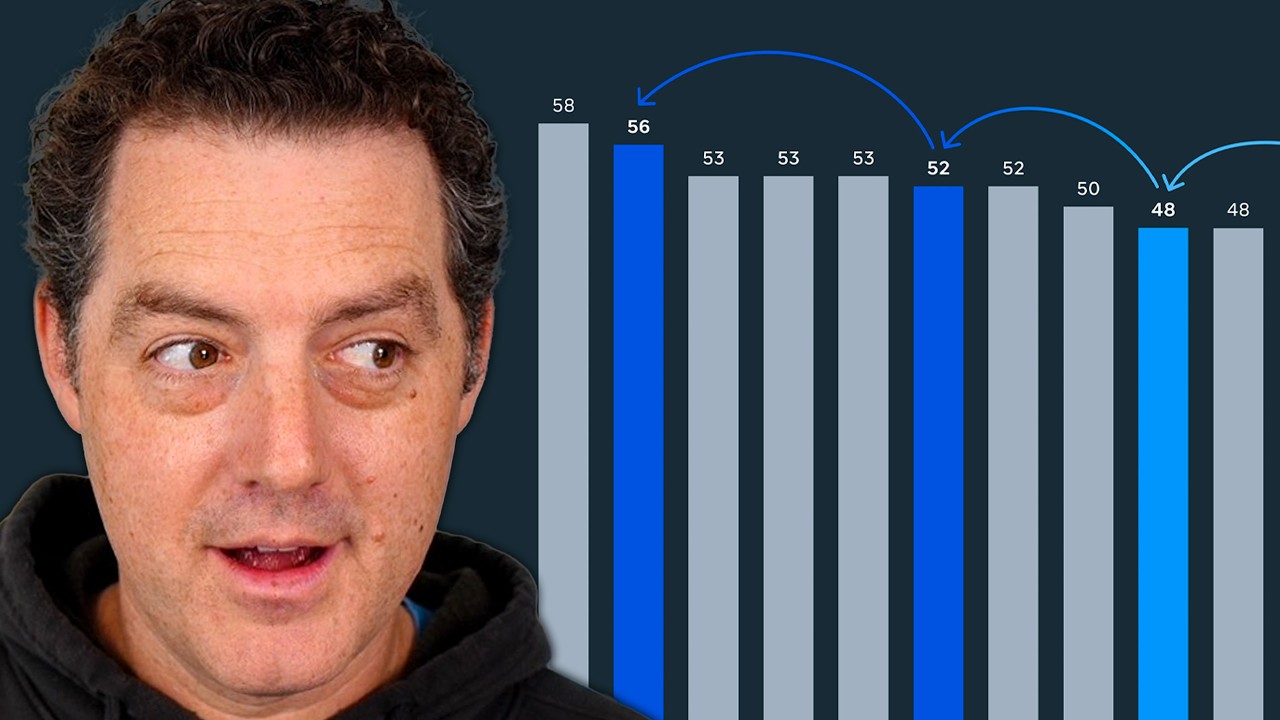
5:28Berman walks a comparison chart placing Muse Wonder Full Max and Muse Wonder against Fable 5.1, GPT-6 Astra, and Opus 5.5. The numbers as shown: Personal Super Intelligence Index — 59, number one (a benchmark he'd never heard of); Harvey Lab (legal) — 13.1 for Full, 10.0 for Wonder, dominating (though Grok 4.7 scored 19.6 and isn't on the chart); OSWorld (computer control) — 78.4 / 72.6 vs Opus's chart-leading 81; Terminal-Bench (coding) — 57.1 / 52, right in line with Fable, Astra, and Opus. 7:12Deep Suite — the benchmark he calls the most accurate reflection of how developers actually feel about coding ability — is the standout: 79, number one (the smaller model scores 78.8), versus Fable 67, Astra 71, Opus 74. 7:50On the Artificial Analysis Intelligence Index, it comes in second at 56% behind Opus 5.5's 58% — tied with Sonnet, ahead of Fable 5.1 and GPT-6 Astra. Berman is "so impressed," but hedges that "benchmarks don't mean everything."
Cost per task
8:50The catch is cost. Muse Wonder Max runs $4.52 per completed task — in line with open-source Qwen 3.8, but the intelligence-versus-cost quadrant puts it in the "top right": very good, but expensive. Sonnet, Opus, and Fable sit at the $7.63 end; Gemini 4 Argon (unreleased) is projected at $2, Astra at $3.26. His own sweet spot remains GPT-6.1 Sol Max ("by far my favorite model on the planet" once you factor in quota, intelligence, and price), with xAI's MiMo a "very compelling" cheaper alternative a few points behind. He closes on a ranking from Theo: Opus 5.5 S-tier, Muse Wonder right beside it in A-tier, GPT-6.1 Sol below — "think about how much of a gain Meta has had over just a year."
Claims checked
Muse Wonder and Muse Wonder Full are real. Released Oct 12, 2026 by Meta's Superintelligence Lab — Meta's first frontier models. Confirmed by Meta's announcement, Meta AI Research, and TechCrunch.
Pricing matches. Muse Wonder: $4/M input, $20/M output, 1M-token context, via Meta Model API; Muse Wonder Full restricted to Muse Code subscribers.
The benchmark figures are relayed from the video's comparison chart (third-party trackers / Meta's materials), not independently re-run here. One written source notes Meta's own model card claimed parity with Fable 5.1 and GPT-6 Astra without publishing numeric scores — so treat the specific numbers (Deep Suite 79, OSWorld 78.4, etc.) as directional, not settled.
Auto-caption garbles normalized: "Muse Wonderful"→Muse Wonder Full, "GPT 6.1 Soul/Soul Max"→GPT-6.1 Sol / Sol Max, "GBT6 Astra"→GPT-6 Astra, "Gro/Gra 4.7"→Grok 4.7, "Quen 38"→Qwen 3.8, "Mimo/Xiai"→MiMo / xAI, "codecs"→Codex, "3JS"→Three.js.
The "leave your lineage pure" message is the reviewer's own account of a Muse Wonder Full output, not independently reproduced.