🎵Sounds of Agents
✎ Suggest◎ Sign in

Deep Dives

In-depth explorations of AI music and audio tools.
Page 1 of 1 · showing 1–9 of 9

AI Voices Sound Entirely Human. What's Next? — Inworld TTS-2

In 2021 the Blizzard Challenge saturated — human listeners could no longer tell AI speech from a real actor. This deep dive covers how voice AI labs define, measure, and train for the new frontier: expressiveness. Covers the Mean Opinion Score (MOS) and its ITU-standardization history, LLM-style arenas with Elo rankings (Artificial Analysis), AI judges like UTMOS/DNSMOS (and why speech language models can't yet replace human raters), Inworld's deterministic DSP proxy (pitch range + variation + loudness variation), and how DPO/GRPO shape a voice — including a Goodhart's-law case where optimizing for intelligibility flattened prosody, and a reward-hacking case where a model rambled forever. Closes with the Stephen Hawking lesson: sounding human isn't always the goal.

deep-dives
Julia Turc
Published2026-09-02

Three of the Four Stages Are Nearly Free: Inside Hugging Face's Open Voice Loop

A 7-minute architectural breakdown of huggingface/speech-to-speech that does the rare thing: it names the bottleneck. VAD, transcription and speech synthesis are all effectively free, which leaves the language model holding the entire perceived delay by itself - so most voice-agent optimisation targets the wrong stage. Verified against the repo (10,161 stars, Apache-2.0), NVIDIA's Parakeet card (6.34% WER, 25 languages) and OpenAI's pricing page ($32/$64 per million audio tokens, exact). Two things the video gets right that most coverage does not: time-to-first-audio beats total synthesis time, and you should hunt the 95th percentile rather than the average. It also corrects itself twice - the repo is from August 2024, and you own four ways to fail with no support contract.

deep-dives
Cloud Codes
Published2026-07-31

How Far Are We from "Her"?

Julia Turc explores the evolution from cascade voice assistants to full-duplex models — featuring Moshi (Kyutai), GPT Live, and Thinking Machines' interaction models, with insights from Neil Zeghidour on inner monologues, audio tokenization, and why end-to-end voice AI will dominate in 1–2 years.

deep-dives
Julia Turc
Published2026-07-24

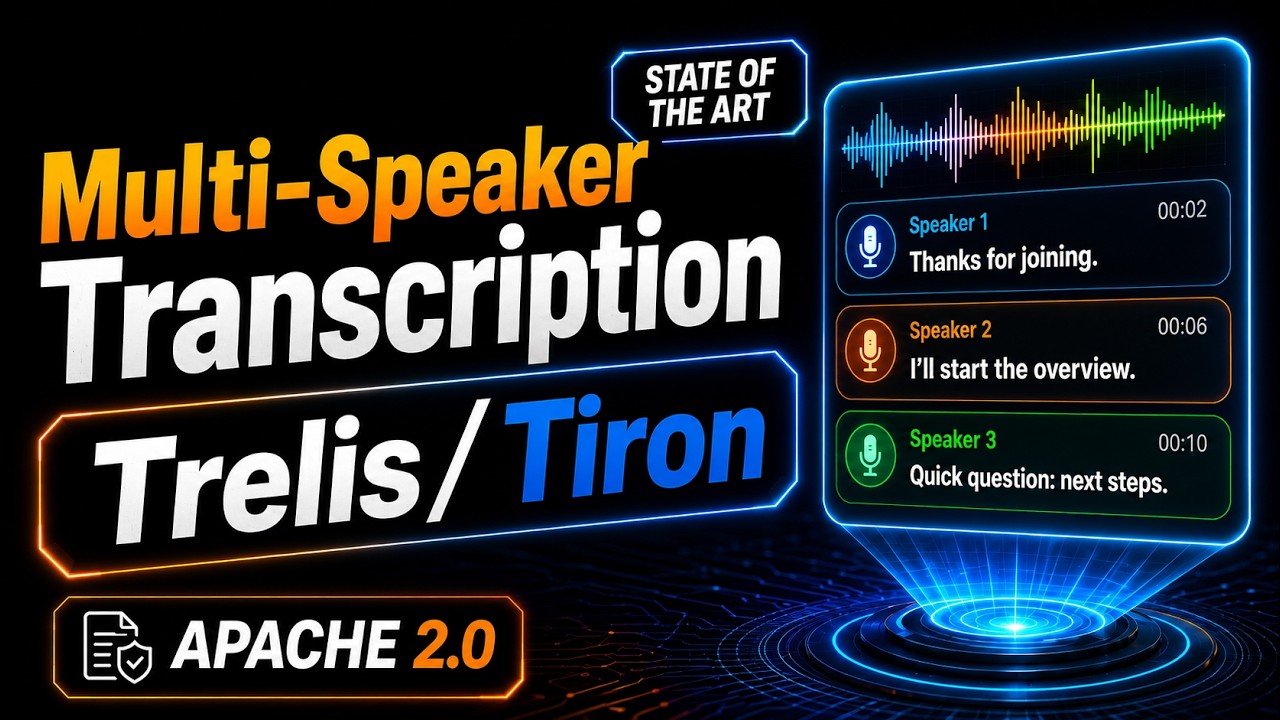
Trelis Tiron - State-of-the-Art Multi-speaker Meeting Transcription and Attribution (Open Weights!)

deep-dives
Editorial
Published2026-07-21

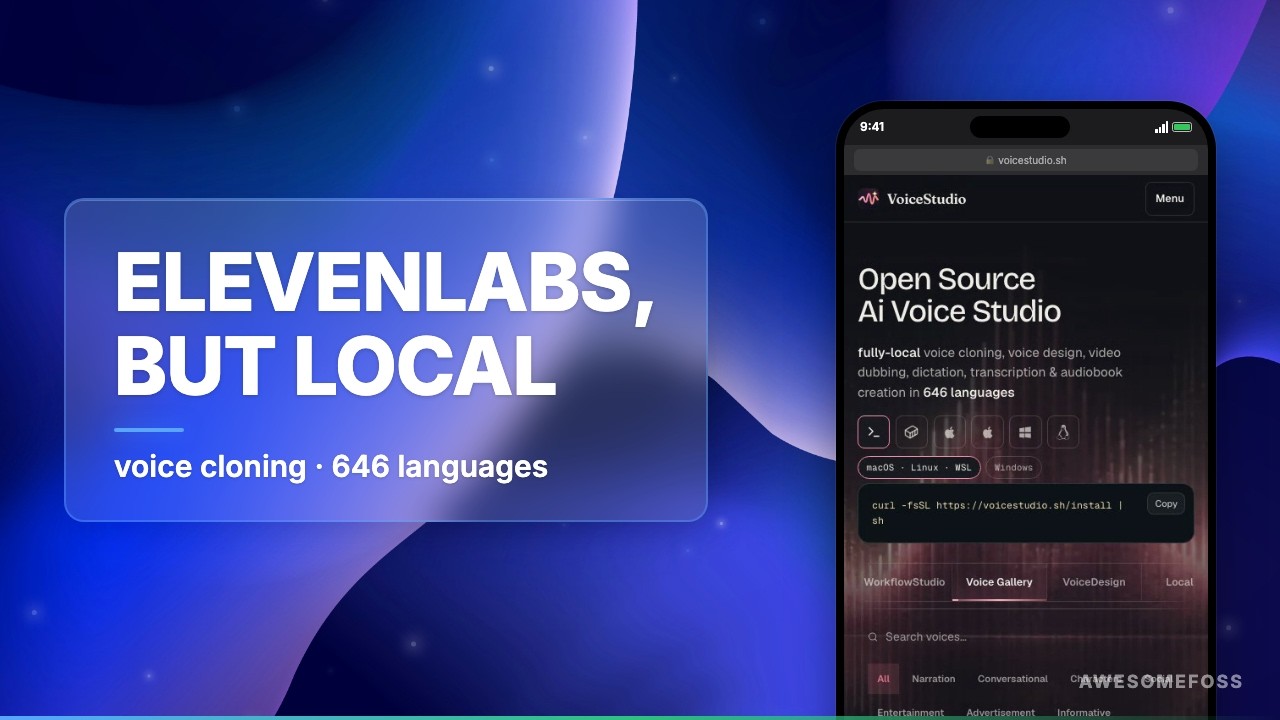
I Tried the Open Source ElevenLabs Alternative (Voicebox)

Better Stack explores Voicebox, a free open-source local AI voice studio that bundles voice cloning, TTS, system-wide dictation, and MCP agent integration into one desktop app — positioned as the Ollama moment for voice AI.

deep-dives
Better Stack
Published2026-06-17

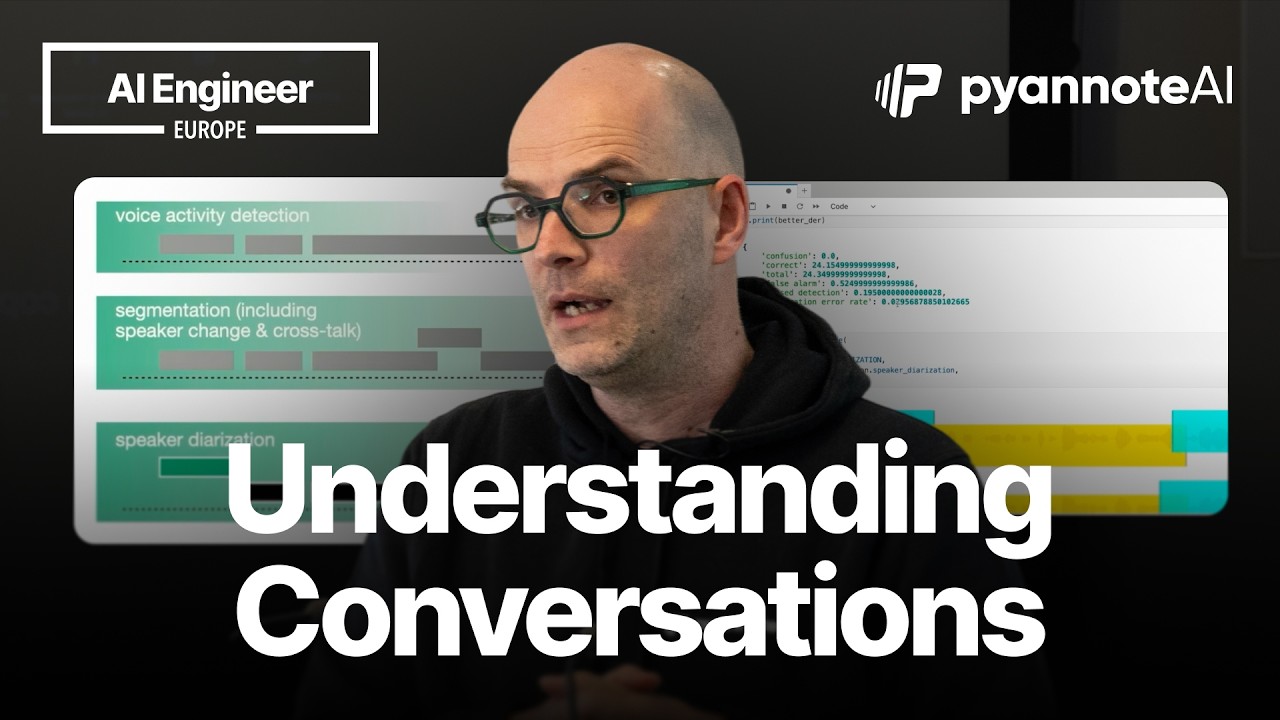
Beyond Transcription — Building Voice AI That Understands Conversations

Hervé Bredin (pyannote.ai) on speaker diarization: why 'who said what' matters as much as 'what was said', the gap between benchmark numbers and real-world performance, and how pyannote reconciles STT with diarization at the word level.

deep-dives
Hervé Bredin — AI Engineer Conference
Published2026-06-05

State of the Art Meeting Transcription with Overlapping Speakers and Speaker-Identification

Trelis Research benchmarks Chorus Pro against Gemini Pro 3.1 on meetings with overlapping speakers — revealing that a dedicated, smaller transcription model can outperform general-purpose LLMs when 4+ participants talk over each other.

deep-dives
Published2026-05-28

Voice Loop — A Local Voice Agent in ~500 Lines of Python — Trelis Research

Building a local voice agent with Whisper, Kokoro TTS, and an LLM in ~500 lines of Python.

deep-dives
Trelis Research
Published2026-04-13

NVIDIA's New Voice AI Is Absolutely WILD — PersonaPlex

NVIDIA released PersonaPlex — an open-source full-duplex conversational AI that listens and speaks simultaneously with near-zero latency. Unlike traditional voice assistants, it backchannels with "uh-huh" and "right" while you're still talking.

deep-dives
Editorial
Published2026-01-25