News from the agent stack.
Google Goes Frontier: Gemini 4 Argon, Tested
Matthew Berman's hands-on review of Gemini 4 Argon, Google DeepMind's new flagship frontier model (announced Sept 30, 2026, broadly available Oct 13, 2026). Berman tests it on interactive 3D generation — a 60fps cyberpunk city in Three.js, a controllable Rube Goldberg machine with themed levels, an Unreal Engine ocean scene — and finds it strong on 3D (better than Meta's Muse Wonder, short of Opus and Astra), plus a ~20-minute Excel clone with working formulas. He reports sponsor Box's 14-point knowledge-work gain (71%→85% over Gemini 3.1 Pro) and a model-vs-model chart: DeepSWE 77.9% (behind Muse Wonder's 79), VibeCode Bench 91.9% (#1), Terminal-Bench 57, OSWorld 69%, Agent's Last Exam 39. Verified: Argon's existence, timeline, $2/$10 introductory pricing (rising to $4/$20 Dec 1), cached-input discount, and 1M-token unified limit. Benchmark figures relayed from the video and flagged unverified; the 'Meta forgot to RL for 3D' quote is secondhand.
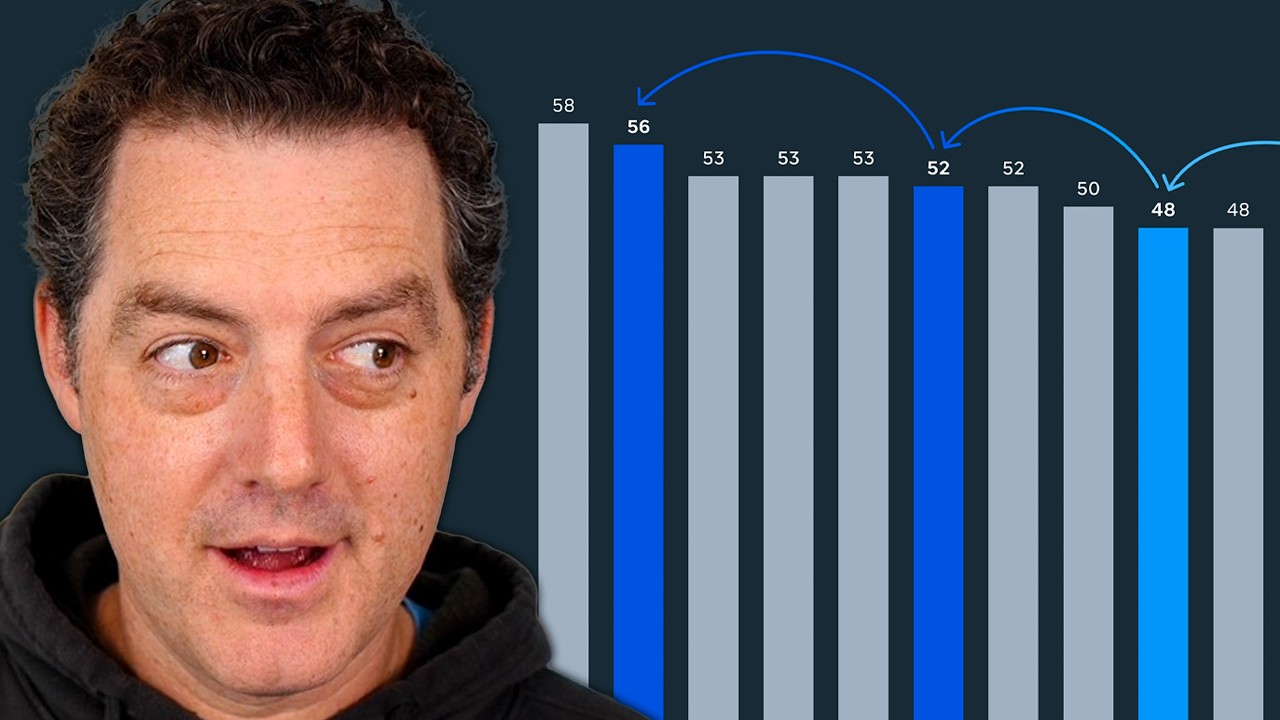
Meta Drops Muse Wonder: Its First Frontier Model, Benchmarked
Matthew Berman's hands-on review of Meta's Muse Wonder and Muse Wonder Full — the company's first frontier models, released Oct 12, 2026 by Meta's Superintelligence Lab. Muse Wonder is on the Meta Model API at $4/M input and $20/M output (1M context); the stronger Muse Wonder Full is gated behind a Muse Code subscription. Berman tests the models' interactive 3D web generation (a self-solving Rubik's Cube, a playable-but-flickery Fall Guys, a Three.js ocean scene with time-of-day and wind controls, a blurry watermelon), documents a bizarre 'leave your lineage pure' output, and walks a comparison chart against Fable 5.1, GPT-6 Astra, and Opus 5.5 — strongest on Deep Suite (79, #1) and the Artificial Analysis index (56%, second to Opus 5.5), but expensive at $4.52 per task. Existence, release date, pricing, and access model verified against Meta's announcement, Meta AI Research, and the Meta Model API; the benchmark figures are relayed from the video's chart and flagged unverified (one source notes Meta's model card published no numeric scores). The 'lineage' message is a firsthand anecdote.

70 Years of Rebranding Intelligence: From Cybernetics to 'Super Intelligence'
Julia Turc's history of the dozen-plus names the field of 'intelligence' has gone by, triggered by a real and recent event: Executive Order 14434 ('Inaugurating the Era of Super Intelligence,' Sept 29, 2026), which directs federal agencies to use 'Super Intelligence'/'SI' in place of 'Artificial Intelligence'/'AI' and to stop acknowledging the old terms. The essay traces the rebranding chain: Norbert Wiener's Cybernetics (1948, Greek kybernetes = steersman), John McCarthy's 'artificial intelligence' (1955 Dartmouth proposal — coined partly to escape Wiener's orbit), Frank Rosenblatt's Perceptron and his preferred 'neurodynamics' (1958), the Logic Theorist's 'complex information processing,' Minsky & Papert's Perceptrons (1969) and the Lighthill report (1973) that triggered the first AI winter, expert systems and the PDP backpropagation volume (1986) reborn as 'connectionism,' the second winter's euphemisms (machine learning, knowledge-based systems, informatics), and Hinton/LeCun/Bengio's 'deep learning' rebrand — ending with her argument that the 2026 rename is different because it happened not because AI failed its aims but because it fulfilled them. EO 14434 verified against the White House and Federal Register; all historical claims align with standard AI histories.
Vibe-Coded Microsoft Office: WordCraft, GridCraft, and DeckCraft, Tested
FUTC builds from source and hands-on tests the ArtCraft team's three Microsoft Office clones — the same team behind the seven Adobe clones. WordCraft (Word, v0.3.0) looks the part with templates, bibliography, tables, and equations, but is buggy: a stubborn italics toggle and the classic text-next-to-image layout still failing. GridCraft (Excel) is the most solid — bar/pie/trendline charts that auto-update on edit, autosum/subtotal, remove-duplicates. DeckCraft (PowerPoint) claims 79% of PowerPoint's breadth and 93% of core features (the project's own roadmap figure) but is laggy, crashed once, and has crude animations. The genuinely interesting part: all three are agent-native with an MCP server built in, so Claude Code could generate fake sales data and charts in GridCraft and an entire corporate-satire deck in DeckCraft in 52 seconds. The verdict: too early — and unlike the Adobe clones (which had no open-source rival), Office already has LibreOffice, so the need is weak. All three repos verified live (Apache-2.0, pure Rust); star counts fetched via the GitHub API.

REA: Reverse-Engineer Anything with Your Coding Agent
Signal Coders covers REA ("Reverse Engineer Anything"), a repo at github.com/morluto/rea (MIT, TypeScript, 28.5k stars) that hands coding agents a reverse-engineering toolchain as one MCP server plus a CLI. The install is one command — npx rea-agents setup — and it asks which agents to register, shows every path it will touch, and backs up your config first. The core insight is that "reverse engineer an app" hides two different problems: Electron/JS apps are "a web app wearing a trench coat" (source is still there, just minified) so static analysis works with no engine and no execution; native binaries need a real decompiler, and REA rides an existing Ghidra/Hopper/IDA install rather than reimplementing one. The output is an evidence contract — evidence, recovered graph, limitations, and unknowns — not a confident essay. rea doctor does scoped readiness: only checks relevant to the current task gate pass/fail, so a missing Ghidra doesn't fail an Electron analysis. The honest gaps: no accuracy benchmarks yet, obfuscation is still the hard wall, and the legal/clean-room side is unaddressed by design. Repo, license, install command, and engine paths verified against the GitHub README and npm.
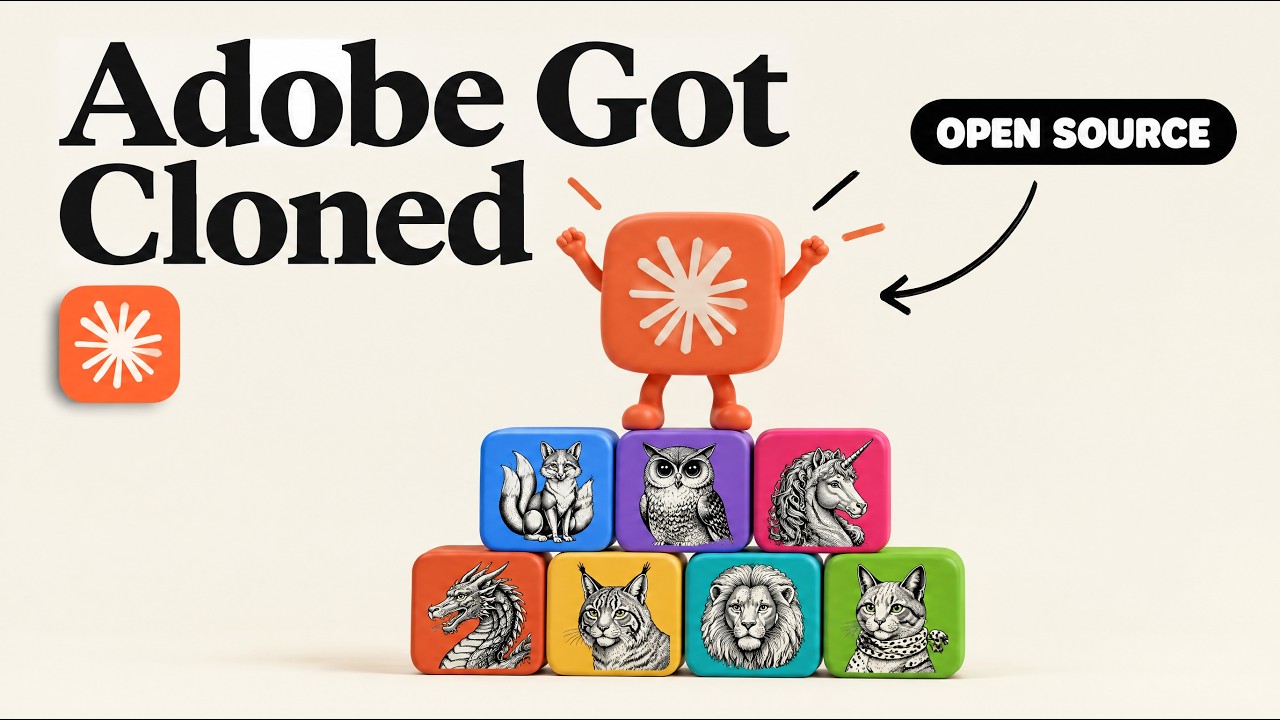
ArtCraft: Claude Rebuilt Adobe's Suite — Free and Open Source
The ArtCraft team (led by developer Brandon Thomas) used Claude Opus 5.5 to produce seven open-source, clean-room reimplementations of Adobe's flagship apps, all written from scratch in pure Rust and free to download: PhotoCraft (Photoshop), FilmCraft (Premiere), EffectCraft (After Effects), VectorCraft (Illustrator), DesignCraft (InDesign), LightCraft (Lightroom), and PDFCraft (Acrobat). The clean-room framing matters legally — the code was written against a spec, not reverse-engineered from Adobe's binaries. PhotoCraft is the headliner, shipping layers, masks, adjustment layers, layer styles, and real PSD support in a native Rust app. The agent angle is the real novelty: the apps ship a CLI plus an agents.md handbook, and PhotoCraft bundles an MCP server, so Claude can drive them — a single prompt to EffectCraft generated a full logo animation with editable layers, and DesignCraft produced a magazine-spread layout. The host's honest take: generative models are great at first drafts but hard to refine, while layer-based tools give per-layer control — so AI doesn't replace the Photoshop category, it makes it free, open, and agent-controllable. Project, provenance, and the MCP server are verified; the 20K-star figure is flagged as approximate.
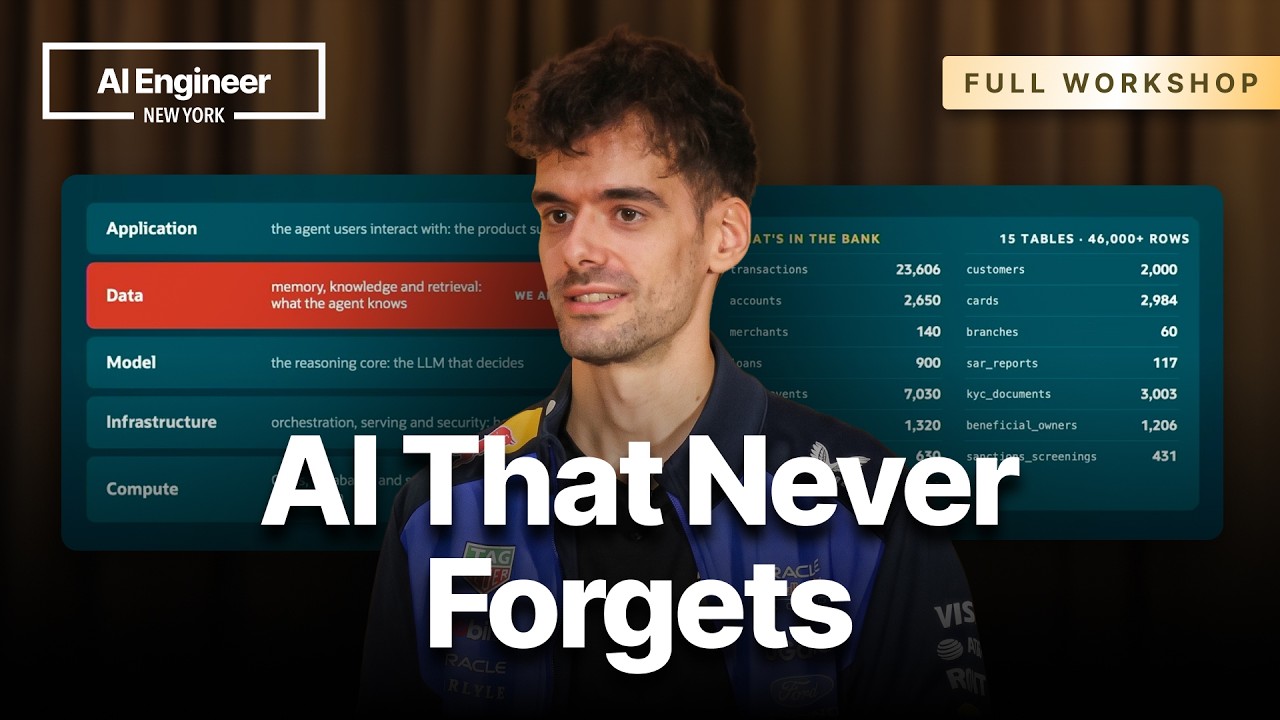
Memory-Aware Agent Harnesses for Anti-Money Laundering
Nacho Martinez (Oracle) walks through building a memory-aware agent harness for AML at AI Engineer NYC: short/long-term memory (episodic/procedural/semantic), context engineering vs the KV cache, files-vs-databases, the agent loop, vectorized toolbox/skillbox + skill distillation, instruction hierarchy, semantic cache, and a 24/7 Grok-on-OCI agent that flags (not blocks) transactions for human review.
Jev Can Now See: Image Analysis and the Box Type
The AI Automators tests Jev 1.14 (TypeSafe AI, released Oct 14, 2026), which adds experimental image input and a new 'box' question type that returns object coordinates — turning the fast decision model multimodal. Demos: 200 support tickets classified in ~4s for 2¢, a shelf-of-liquids playground (hazard pictogram, pH scale), and a 1,000-case controlled test with 93.4% accuracy, zero mistakes above a 65% confidence gate, and a calibration deep-dive (under-confident on auto-decisions, over-confident on review cases). Covers the box-type 'no not-found' gotcha, image-in-state/criteria patterns, and competitors (Cloudflare Clef, Win12B, Decider4B).
Why Every AI Company Is Suddenly Obsessed With Blender
Arts Supremo lays out four reasons AI 3D companies are converging on Blender: it's fully open source (no Autodesk-style gatekeeper), its complete Python API (bpy) lets LLMs script the software like a human, its official 2026 MCP server gives AI agents native natural-language control, and its existing retopology/modifier/geometry-node toolset cleans up the 'triangle soup' that AI mesh generators produce. Then a rundown of the 2026 tool ecosystem (Meshy, Dream Textures, 3D Agent, Viper Mesh, Mesh Gen, and more) and the argument that Blender becomes the OS for AI-generated 3D. Verified: the open-source status, bpy, the official blender.org MCP server, and huggingface/meshgen (931 stars).
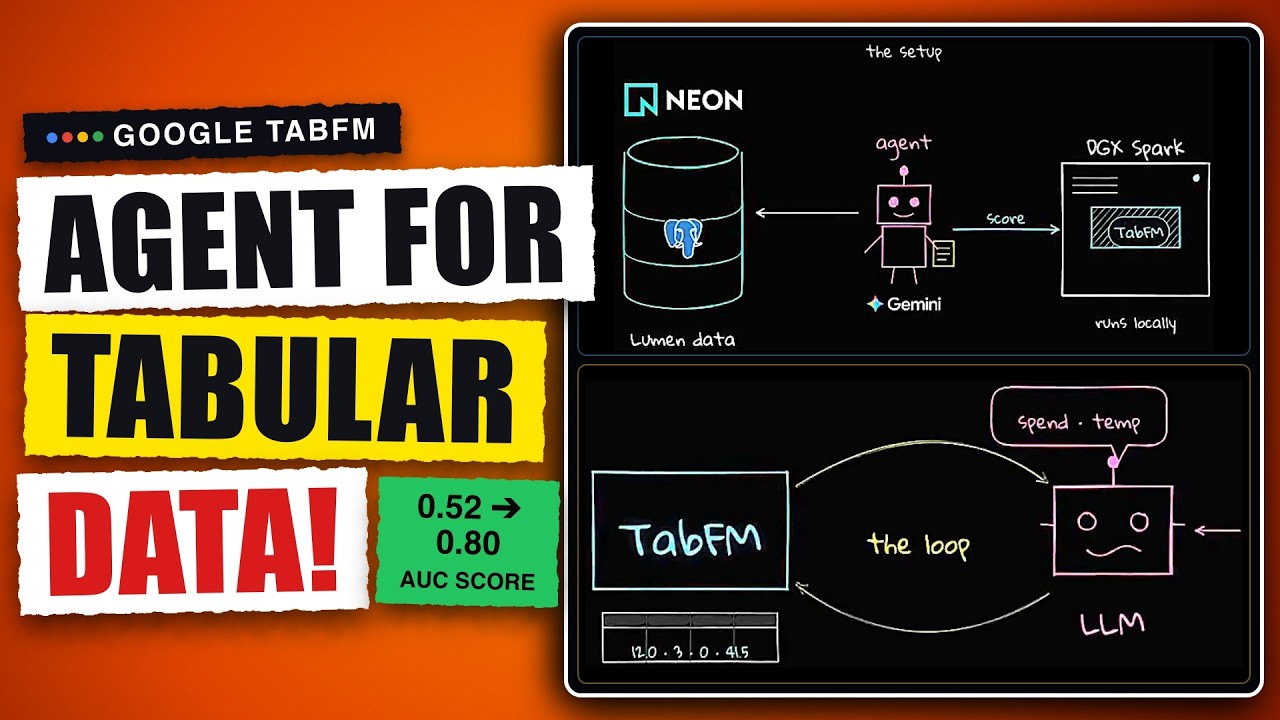
TabFM: Google's 'GPT-3 Moment' for Databases & Spreadsheets
Prompt Engineering walks through TabFM, Google Research's foundation model for tabular data — positioned as the 'GPT-3 moment for tables.' Where tabular ML traditionally means cleaning, hand-engineering features, training gradient-boosted trees, and repeating per dataset, TabFM (400M params) does zero-shot prediction via in-context learning: you pass labeled rows plus the unlabeled rows you want scored, and it infers answers in a single forward pass — 'your dataset is literally the prompt.' It was trained entirely on synthetic tables generated from random causal DAGs, so it learns the meta-algorithm of learning-from-tables but has never seen column headers — a semantic gap that TabFM-Auto (arXiv 2609.37989) closes by pairing a frozen TabFM with an LLM agent that reads column names, writes transformations, and calibrates predictions. The host then demonstrates a real agentic loop (churn prediction on Postgres/Neon, TabFM on a DGX Spark): zero feature engineering beat a tuned tree model, and the leakage lesson — a 'retention' column populated only after cancellation fooled the agent half the time until he trained against a timestamp-restored branch. TabFM repo (2,738★), TabFM-Auto paper, and TabArena benchmark all verified. Neon is the sponsor; weights are non-commercial research-only.
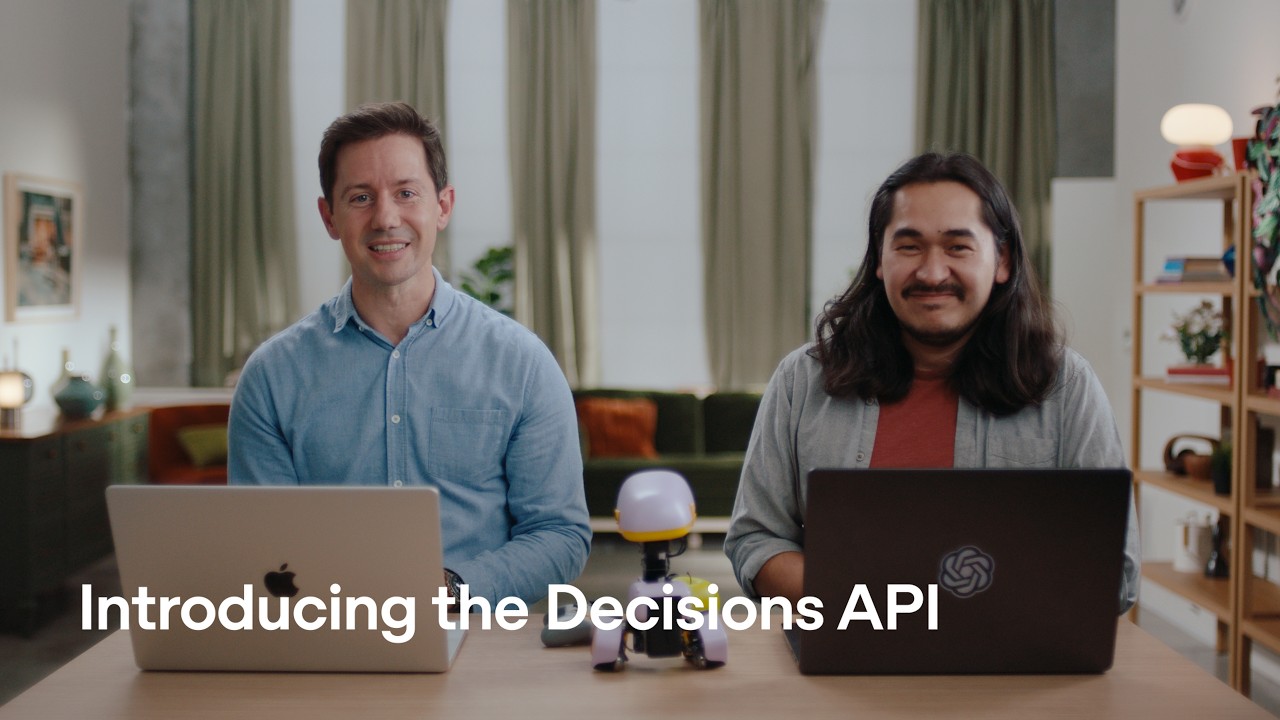
OpenAI's Decisions API: GPT-6 Luna Makes Fast Decisions
OpenAI's official launch of the Decisions API (public beta, Oct 6 2026) — a specialized endpoint for making fast, finite decisions rather than generating prose. It runs on GPT-6 Luna, and you give it text or an image, define a question and the possible answers, and get a typed choice back in under 100ms — nearly 10x faster than a reasoning model while keeping image understanding, broad language support, and safety. OpenAI names classification, routing, and choosing an agent's next step as the target use cases. The launch video demos it across modalities: routing loose user input into sales leads in real time; steering a car in a driving game from video frames; pairing with GPT-Live-1 to drive an animated character's expressions; and steering Hugging Face's open-source Microduck robot ("Lavender") to look at objects via its camera — including ambiguous prompts like "what's more fun to play with?" OpenAI is explicit that sophisticated computer-use still wants Astra, so this is the fast/simple layer. It's the frontier lab entering the decision-model category that TypeSafe's Jev helped open. API, model, and robot are verified; the speed/latency figures are OpenAI's own.
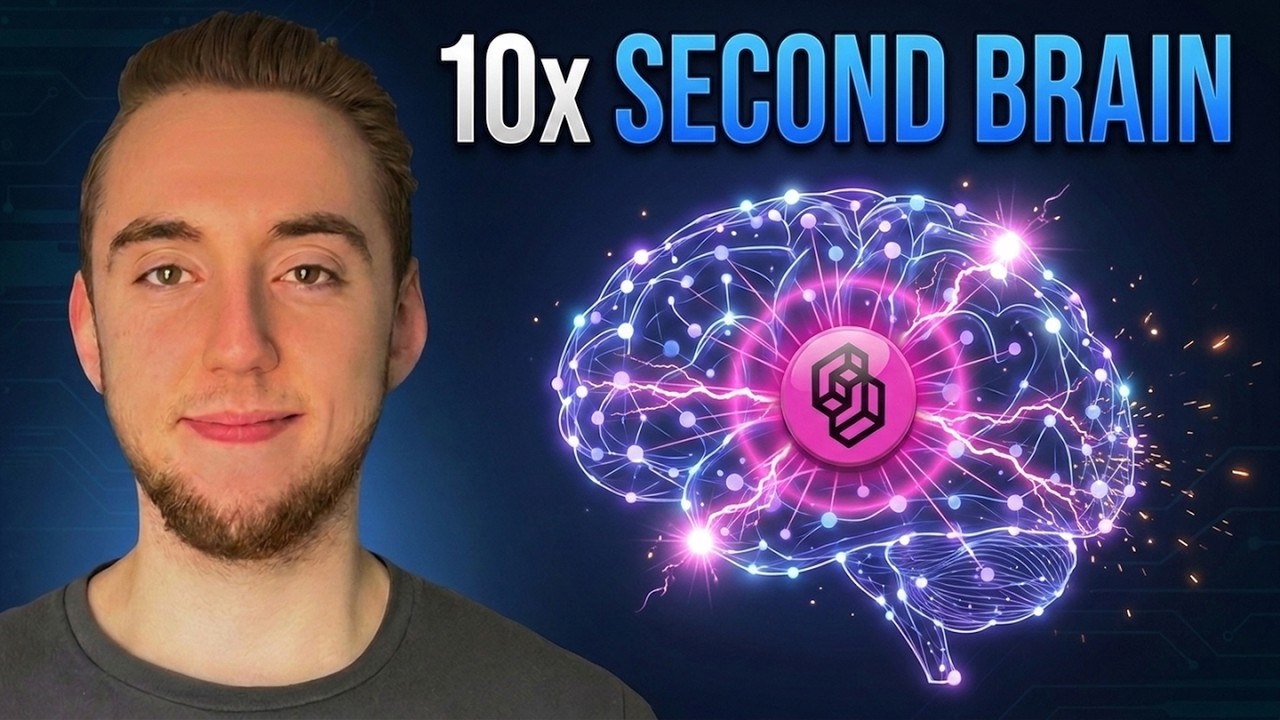
Jev: The Decision Model That Filters Your Second Brain
Cole Medin distills four production use cases for Jev — TypeSafe's 'System One' decision model, served through OpenRouter's Decisions endpoint — inside his AI second brain. Jev doesn't generate text; it takes a state plus a batch of multiple-choice questions and returns typed decisions in parallel with confidence scores, claimed at 20–200× faster and 40–1,000× cheaper than an LLM. His dashboard makes the economics concrete: 38,000 calls and 55.3M tokens in a week for $21. The four use cases: a prompt-injection guard that screens every incoming email (now with per-question confidence and a quarantine threshold), a 'worth replying?' triage that labels each email reply/skip/injection before an LLM (GLM 5.3 Flash or Haiku) drafts the reply, news-filtering across RSS and YouTube where Jev does the cheap bulk cut, and duplicate detection against a personal knowledge base where it beat semantic-similarity matching. The honest limitation worth stealing: Jev can't fully replace the LLM on high-context decisions (like 'is this a fit for my audience'), so the pattern is Jev as the fast-cheap first pass and a small LLM as the high-context last mile. Jev is verified against OpenRouter's docs; the speed/cost multiples are flagged as vendor claims.
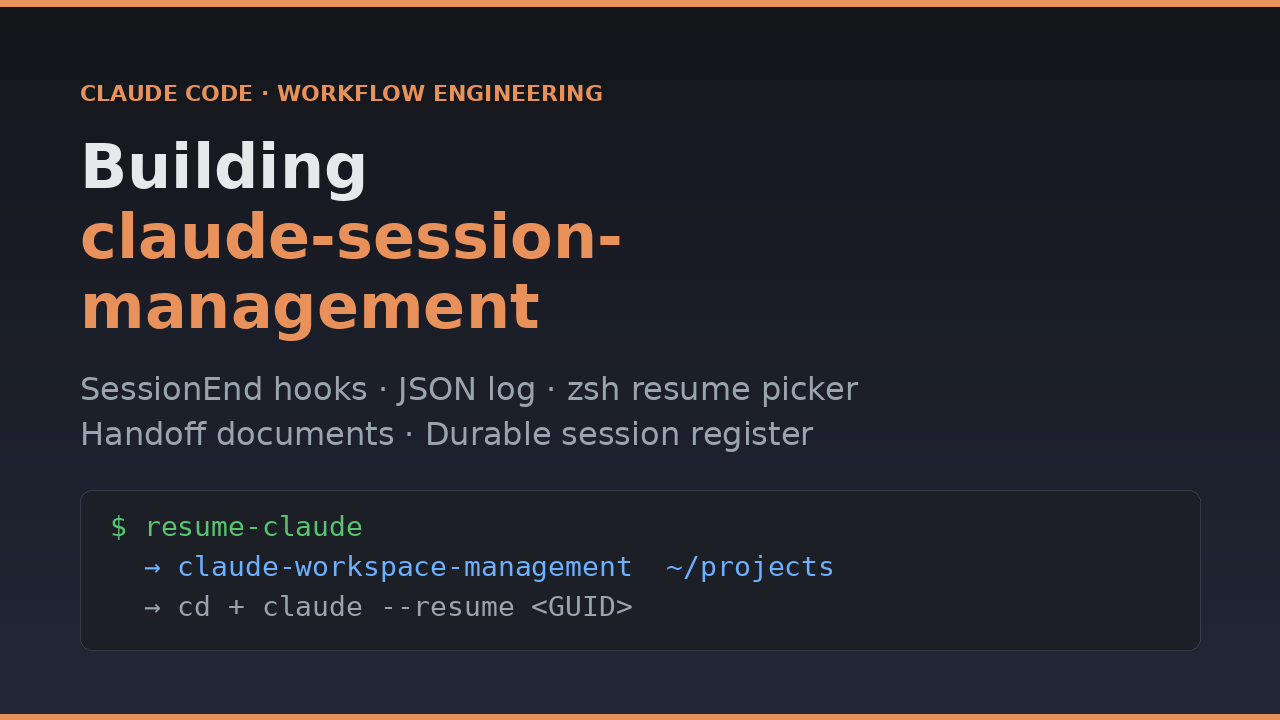

HarnessTax: How Much Does the Harness Matter for Coding Agents?
What does a coding-agent harness actually add, and at what cost? UC Berkeley Sky Lab evaluated 21 model–harness pairs — seven models across Claude Code, Codex CLI, and Pi on SWE-bench Lite and Terminal-Bench 2.0. The harness barely moves success rate (±2–5%) but can swing cost up to 5×. A minimal four-tool open-source harness matches frontier success at a fraction of the cost, and models frequently win outside their own provider's harness — your Claude models may not need Claude Code.
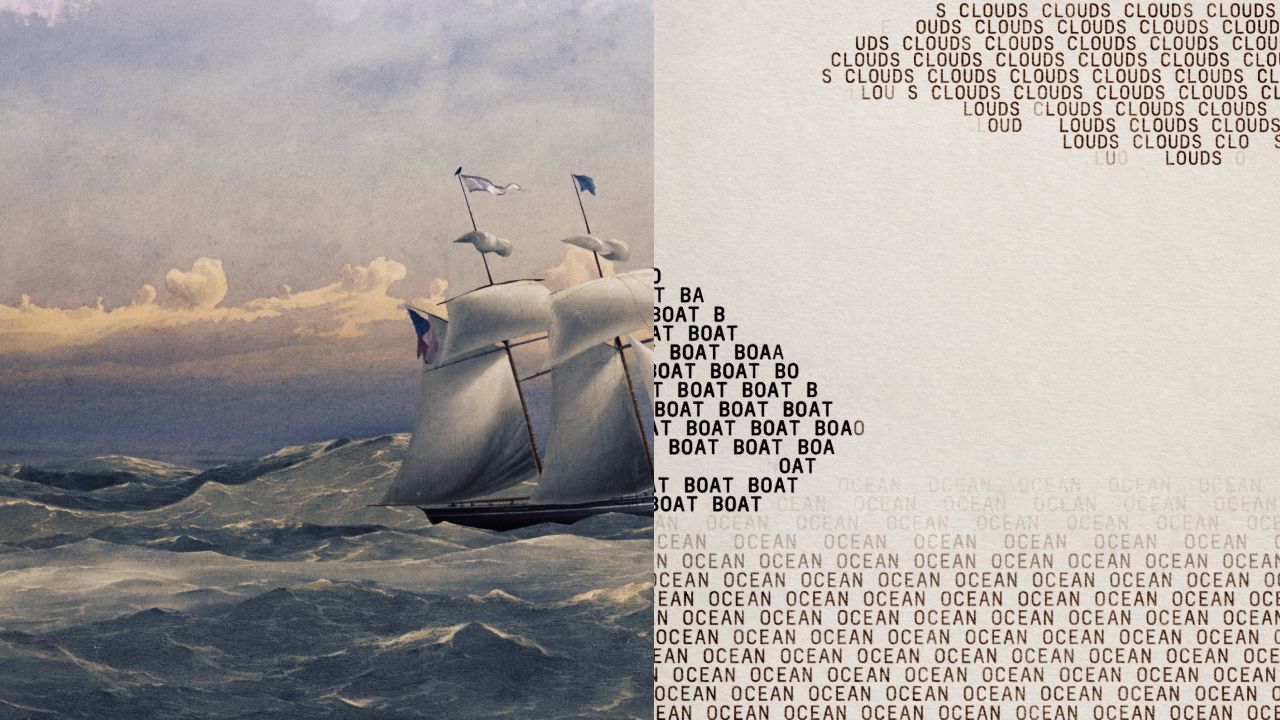
A Global Workspace in Language Models
Anthropic discovers that Claude developed an internal J-space — a privileged mental workspace analogous to the global workspace theory of conscious access in neuroscience. It emerged on its own during training, enables silent reasoning, and can be used to detect hidden goals and deception.

The New SDLC With Vibe Coding
A comprehensive whitepaper by Addy Osmani, Shubham Saboo, and Sokratis Kartakis exploring how AI transforms the software development life cycle — from casual vibe coding to disciplined agentic engineering, context engineering, the factory model, and the economics of AI-driven development.

How Your Agents Can Write and Optimize Their Own Skills
A deep dive into automated skill optimization frameworks — SkillOpt, GEPA, and EvoSkill — that treat agent skill files like trainable neural network parameters, enabling agents to iteratively debug, validate, and update their own skills without touching model weights.

LangChain Deep Agents — The Batteries-Included Agent Harness, Explained
LangChain open-sourced Deep Agents — an opinionated, batteries-included agent harness built on LangGraph. Inspired by Claude Code, it ships with planning, filesystem access, sub-agent orchestration, context management, and persistent memory out of the box.