ANews from the agent stack.
✎ Suggest◎ Sign in

Deep dives into working agents.

Technical walkthroughs with substance: architectures, prompting patterns, evals, and production lessons unpacked until complex agent systems become reusable design material.
Page 1 of 3 · showing 1–24 of 50

Anthropic Just Revealed 7 New Rules for Prompting Claude 5 Models

Claude Opus 5 and Fable 5 are trained for end-to-end task execution, which inverts old prompting wisdom. Seven rules from Anthropic's guides and keynotes: (1) give the whole job (job + why + guardrails + done), not step-by-step; (2) use the 'interview me' skill to surface unknowns before complex tasks; (3) prompt the why, not just the what; (4) define what done looks like + output style (long-running models over-produce); (5) swap hard rules for reasoned instructions; (6) avoid double-checking prompts (they self-verify) and drop 'think step-by-step'/CAPS; (7) fix Claude's voice once in global instructions. Golden rule: 'Think of Claude as a brilliant but new employee — show your prompt to a colleague; if they'd be confused, Claude will be too.'

deep-dives
Ben AI
Published2026-09-02

Google's 124 Free AI Powers — Running Them in the Claude App (No Code)

Hyperautomation Labs walks through github.com/google/skills — 124 official Apache-2.0 Agent Skills (18.7k stars) — and runs the best three live in the Claude app with no terminal: a handwritten note turned into a dated table, a Nano Banana Pro image tool producing a real 722KB image from one sentence, and Google's security checklist finding hardcoded keys, eval RCE, no-auth admin, and SQL injection in a real app.

deep-dives
Hyperautomation Labs
Published2026-08-27

Gemini 3.7 Flash: You're Only Using 20% of Its Prompting Power

BitBiasedAI breaks down how to actually use Gemini 3.7 Flash per Google's docs: retire persona/flattery/temperature tricks (over-engineering makes it worse), use the C.L.E.A.R.E.R. framework, treat coding prompts as engineering tickets ('report the results'), label screenshots observed/inferred/unknown, use reasoning as a dial, and replace 'are you sure?' with an observable audit.

deep-dives
BitBiasedAI
Published2026-08-26

My Honest Advice to CEOs Who Vibe Code

Brainqub3's codebase-audit veteran warns vibe-coding founders: agents output the plausible, not the correct — so treat Claude Code/Codex as an untrusted contractor bound to a 5-element delivery contract (agreed delivery, constraints+guardrails, proof, verification, ownership). Proof and verification are different.

deep-dives
Brainqub3
Published2026-08-25

DeepSeek Harness: FREE 1 Hour Course — From Install to Agentic OS

Julian Goldie's full DeepSeek Harness course in three levels: install in 5 minutes + Look/Produce/Rules prompting + trajectory view, then the 'everything is a plugin' architecture with Creator Mode and the hidden .dsh config, and finally the agentic OS — one dashboard with Obsidian as shared plain-text memory. Model + harness = agent.

deep-dives
Julian Goldie
Published2026-08-17

A Single Claude Code Skill Just Hit #1 on GitHub — 27 Diagram Types

Signal Coders audits the #1 trending repo on GitHub — one person's single diagram skill with 27 types. It breaks the official 100-word description rule (and is right to), nails the three-level loading with a 1:15:45 ratio, and adds two gates the rest of the industry is missing: a style gate that refuses branded work, and a taste gate that asks 'would a table do the same job?'

deep-dives
Signal Coders
Published2026-08-12

Anthropic Just Published Official Claude Skills

Signal Coders audits Anthropic's official skills repository: 17 real skills (including the production document skills that power Claude's product features), 70 scripts, a 6-line template, a confession about Claude 'undertriggering' skills, and five lessons on instruction-file craft portable to any agent.

deep-dives
Signal Coders
Published2026-08-12

Ultimate Obsidian Agent Guide (OpenClaw + Hermes)

ZazenCodes shows how to manage an Obsidian vault with coding agents across four levels: local Claude Code/Codex, remote control, always-on OpenClaw + Hermes on a VPS, and a custom Pi 'Vault Steward' agent. Git version control, the AGENTS.md file, and Kepano's official Obsidian skills are the backbone.

deep-dives
ZazenCodes
Published2026-08-12

Nao: Free Open Source AI Data Analyst — Chat With Your Data

A hands-on walkthrough of Nao, the free open-source analytics agent that lets anyone on your team chat with your data warehouse. Build agent context like a file system, unit-test reliability, and deploy a chat UI with your own LLM key — fully self-hosted.

deep-dives
Elestio
Published2026-08-07

Prime Agent: #1 on GitHub — The Free Claude Code Alternative That Learns From Every Session

Signal Coders' deep code review of Prime Agent, the #1 repo on GitHub: a coding agent that edits its own instructions with an immutable base prompt, one-tool IPython architecture, fire-and-forget sub-agents, four-budget autonomous mode with quality gates, and the most honest sentence in agent documentation this year.

deep-dives
Signal Coders
Published2026-08-07

A Formal Language for Writing Agent Instructions: Matt Pocock's Skills v1.2.0

A twelve-minute walkthrough of five new skills and a major infrastructure update for the most-starred agent skills repository on GitHub — now 204K stars, MIT-licensed, and an official Claude Code marketplace plugin alongside new Codex sidecar files. The headliner is /wait-what for Opus verbosity, /grill-me with multi-question dependency graphs, and /wizard for deterministic provisioning — but the skill nobody called exciting is the one worth reading: /writing-for-agents, an 81-line formal language for designing instructions agents consume — context pointers, the two loads, information hierarchy, completion criteria, leading words, negation as a failure mode, and pruning.

deep-dives
Matt Pocock
Published2026-08-05

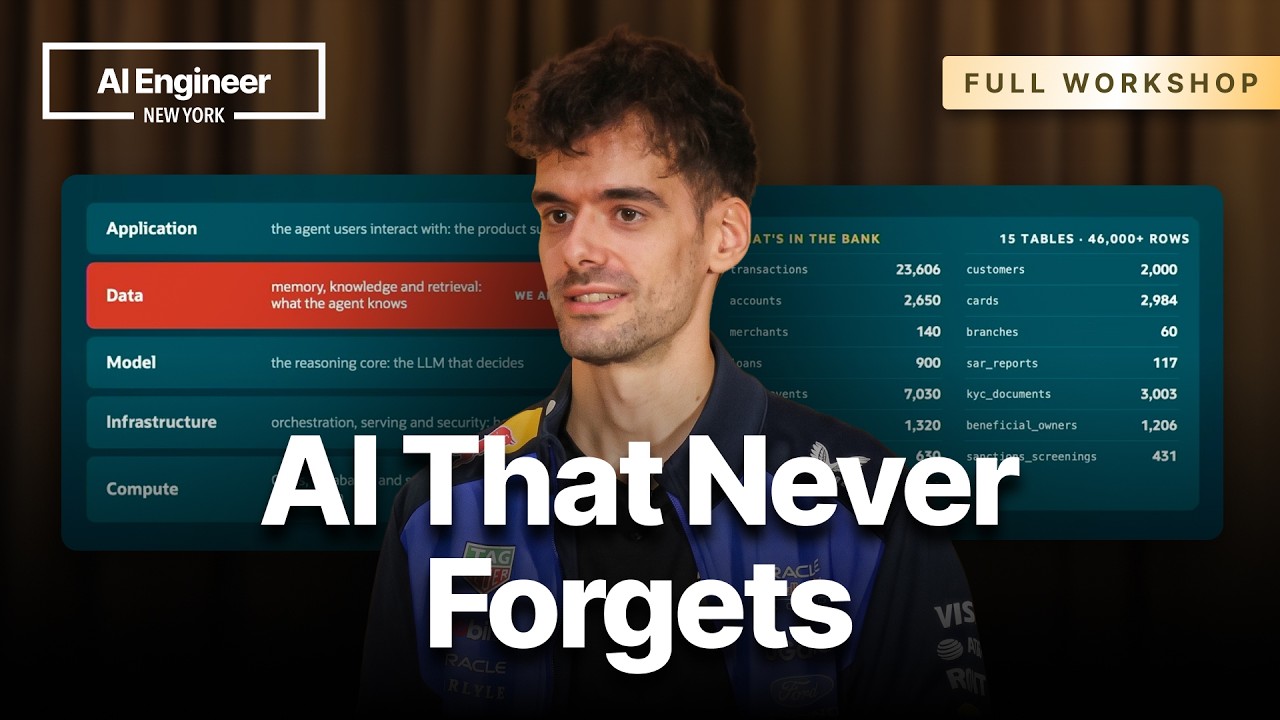
Forgetting as the Compression Step: Tencent's Agent Memory Engine, Checked

Tencent open-sourced an MIT agent-memory plugin that improves results by throwing information away: verbose tool logs fold into a Mermaid graph with node_ids you can grep back, and long-term memory climbs an L0-to-L3 pyramid modelled on Tulving's 1972 consolidation arrow. The repo is real (10,811 stars), the architecture is documented, and the benchmark table publishes raw token counts - so the presenter divides them on camera and finds one row that does not reconcile: SWE-bench prints -33.09% but computes to -31.63%. He also flags that every number is vendor-produced with no independent reproduction, and names the open GitHub issue where prompt-cache invalidation claws back part of the saving. The gains shrink as tasks get harder: +51.52% on WideSearch, +9.93% on SWE-bench. The video's own description gets this wrong; the video does not.

deep-dives
Cloud Codes
Published2026-08-02

Wayfinder: Planning as a Map You Can Leave and Return To

Most agent planning tools die at the edge of a context window, and the real cost is not lost notes but trimmed ambition. Matt Pocock's Wayfinder skill moves the plan out of the session and into the issue tracker as a map of decision tickets, so work outlives any single conversation. Reading the skill source alongside the video surfaces two constraints the video never states: every ticket is either human-in-the-loop or agent-driven, and the skill forbids an agent standing in for the human's side of a discussion — the rule that keeps a decision map from looking complete while encoding nobody's judgement.

deep-dives
Matt Pocock
Published2026-07-30

System Prompts Leaks GitHub Explained: What AI Agent Prompts Reveal

Alex Hitt breaks down the system_prompts_leaks repository — 43,600+ stars on GitHub — revealing how researchers verify leaked AI system prompts, the four-layer architecture inside commercial models, and why prompt obfuscation as a competitive moat is dead.

deep-dives
Alex Hitt
Published2026-07-25

Don't Waste Time on Specs — /prototype Instead

Matt Pocock argues that spec-driven AI development wastes effort. His /prototype skill creates throwaway code artifacts at higher fidelity than discussion, letting you iterate on live UIs and logic before handing off to production — bridging the gap between spec and working software.

deep-dives
Matt Pocock
Published2026-07-23

What Would It Cost to Run Claude Fable 5 Locally?

deep-dives
Editorial
Published2026-07-21

Kimi K3: An Open Source #1 — Coding Tests vs Fable 5, Opus 4.8 & GPT-5.6 Sol

deep-dives
Editorial
Published2026-07-20

Codex vs Fable: Which AI Agent Picked the Better Problem?

Nate B Jones gave Fable and Codex the same open brief: inspect his real business and build the automation that matters. Fable chose the higher-leverage strategic problem; Codex chose the safe, finishable one. Neither was wrong — they optimized for different things. The real unlock: letting AI help choose the problem, not just the tool.

deep-dives
Nate B Jones
Published2026-07-17

I Replaced Hermes Agent And OpenClaw With This

deep-dives
Editorial
Published2026-07-17

mattpocock/skills: Learn the Whole Flow, End-to-End

First proper tutorial for the 162K-star skills repo (7.5M downloads, 38 skills). Complete main flow walkthrough: install via npx, configure issue tracker (GitHub/Jira/Linear/local), grill-with-docs interview, to-spec compression, to-tickets breakdown (each ticket = one context window), implement with auto code review via sub-agents. Smart zone concept (~140K tokens). Only 660 tokens context load despite 38 skills.

deep-dives
Matt Pocock
Published2026-07-16

Claude Fable, Claude Tag, and Anthropic's Culture — Cat Wu & Thariq Shihipar ft Simon Willison

deep-dives
Editorial
Published2026-07-15

Don't Ship Skills Without Evals — Philipp Schmid, Google DeepMind

Philipp Schmid (Staff Engineer, Google DeepMind) reveals that almost none of 50,000+ indexed skills have evals. Covers the full lifecycle: capability vs preference skills, 8 writing tips, a practical eval harness (117 test cases, ~90% accuracy for Gemini Interactions API), and Google DeepMind's CI-style eval workflow where skill changes don't merge without improving tests.

deep-dives
Philipp Schmid
Published2026-07-14

This Skill Makes Claude BRUTALLY Honest About Your Ideas

Brad built a /focus-group skill that clones your real customers into AI agents. Paste any landing page, offer, or email and get honest reactions — not yes-man validation. Two-round system with persistent memory, real customer quotes, and actionable holdout analysis.

deep-dives
Brad | AI & Automation
Published2026-07-09

12 Hidden Settings to 10x Your Claude Code

Claude Code has hundreds of settings but you only need 12. Notification sounds, mobile push, smart allow lists (/fewer-permission-prompt), deny rules (.env + git push), Opus Plan + Sonnet Build (halve usage), effort level sweet spot (max is a trap), privacy/telemetry off, history retention 365 days, auto-compact at 75%, status line monitoring, prompt stashing (Ctrl+S), and removing AI commit attribution. Plus bonus: the prompting shift from steps to outcomes.

deep-dives
Simon Scrapes
Published2026-07-08
‹ prev123next ›