πjust a Pi
✎ Suggest◎ Sign in

Deep Dives

Technical deep dives into Pi tools and extensions.
Page 1 of 1 · showing 1–24 of 24

Pi Setup After 6 Months of Use

Eero Alvar's Pi coding agent config after 6 months: interactive async subagents (master→worker→scout chain-of-command), a Playwright browser extension, his own observational memory (deterministic compaction via observer agents), and prompt snippets — the middle ground between system prompt and skills.

deep-dives
Eero Alvar
Published2026-08-25

I Built an Agentic RPG with MiniMax + Pi

ZazenCodes builds a browser RPG where every GitHub issue is a monster — attacking it spawns a real Pi agent (driven by MiniMax M3) that solves the issue and opens a real PR. MiniMax M3 architecture (sparse attention + MoE), multimodal screenshot debugging, the client/server + createAgentSession engine, and an honest performance verdict.

deep-dives
ZazenCodes
Published2026-08-21

The Agent That Deployed Itself: Docker Sandboxes, and Why Pi Isn't on the List

A coding agent merged to main, deployed to production unprompted and committed a helper script to repeat it - during a ten-minute phone call. Docker Sandboxes answers with a microVM per agent carrying its own Docker daemon, demonstrated on screen by stopping the host daemon. Verified against Docker's docs: the microVM architecture, the three network policies and the Early Access status of Kits all check out - but Pi is not among the ten supported agents, and the custom-kit workaround requires a static API key the presenter openly calls unsolved.

deep-dives
DevOps Toolbox
Published2026-07-31

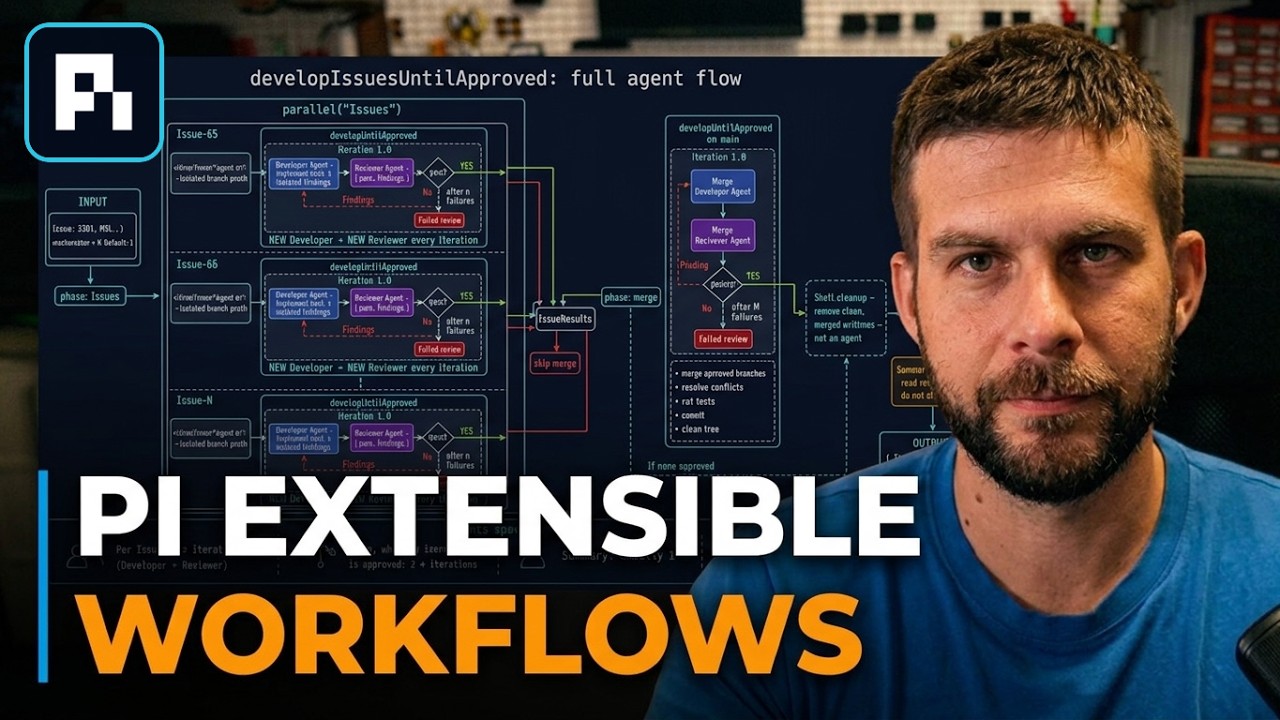
Pi Extensible Workflows: Putting the Loop Back in Code

Asking a model to 'keep going until the tests pass' makes the model responsible for the termination condition - and models forget and cheat. Andrea Baccega's Pi extension moves control flow into a small DSL (agent, shell, parallel, pipeline, prompt, phase, checkpoint, withWorkTree), keeps sub-agent output out of the main context window, and insists cleanup stays deterministic code. Includes the develop-until-approved two-model pattern, per-role tool stripping for a reported 50% smaller system prompt, and verification of the DSL contract against the project's own source.

deep-dives
Editorial
Published2026-07-28

Pi Web Workspace Analysis: Hot-Reload-Safe Sessions and Visual Git Worktrees

Alex Hitt analyzes agegr/pi-web — a decoupled Next.js visual layer for Pi that survives hot reloads via globalThis session anchoring, normalizes tool call data through SSE with dual-layered reconciliation, and maps conversation trees to Git worktrees for spatial codebase management.

deep-dives
Alex Hitt
Published2026-07-25

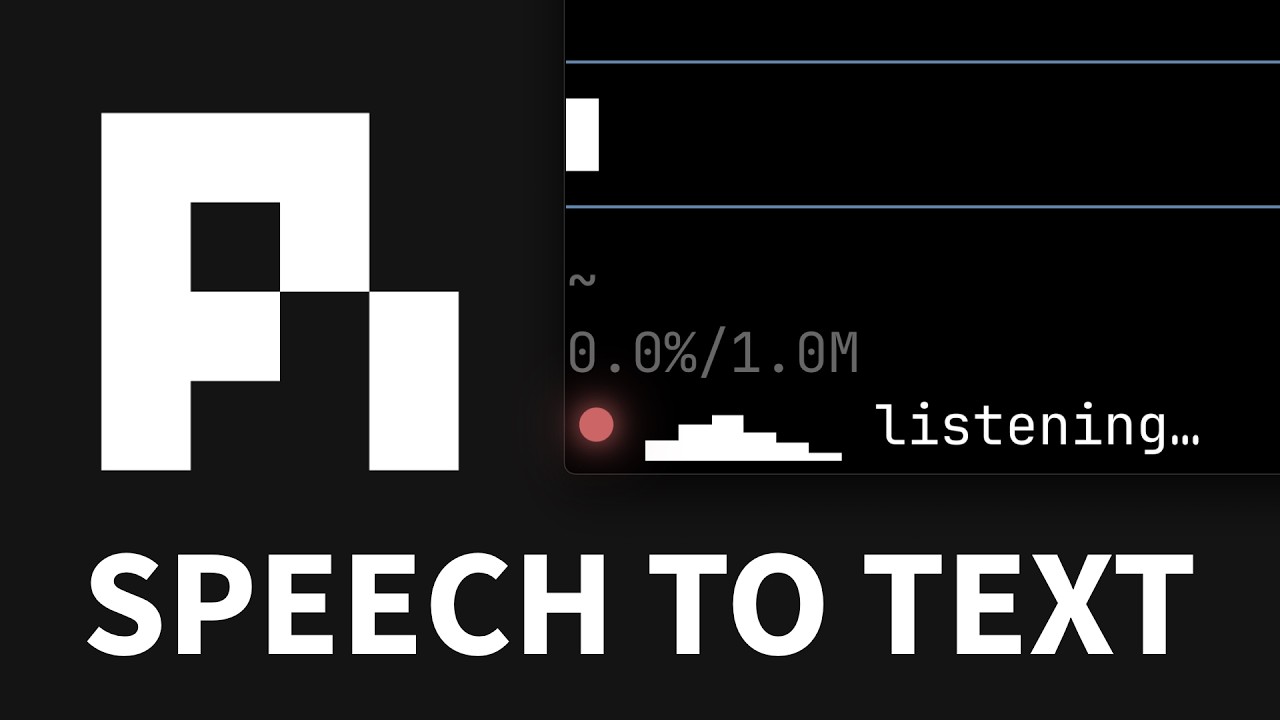
Dictation Extension For Pi

Eero Alvar builds a minimal speech-to-text Pi extension using Deepgram Nova 3 — real-time transcription with content-aware delivery, a customizable live audio meter, and a philosophy of voice-driven agent interaction that replaces typing with stream-of-consciousness yapping.

deep-dives
Eero Alvar
Published2026-07-22

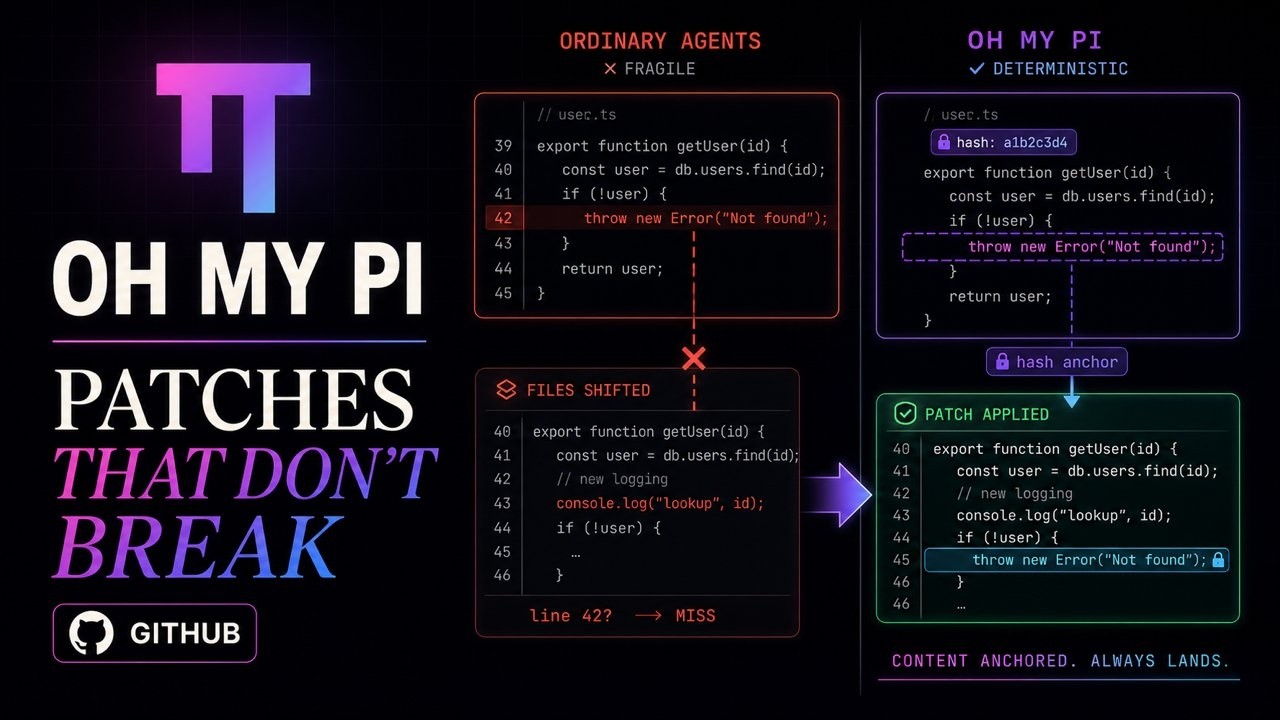
Oh My Pi GitHub Tutorial — Subagents, RPC Mode, and Deterministic Code Patching

A deep technical breakdown of Oh My Pi by can1357 — a Pi extension that replaces fragile shell wrappers with in-process Rust tooling, hash-anchored patching, Tree-sitter AST edits, subagents in cloned worktrees, and an RPC mode for headless CI/CD pipelines.

deep-dives
Alex Hitt
Published2026-06-30

Forget Claude Code, Try Pi Agent Instead…

David Ondrej delivers a complete Pi Agent course — from installation and context engineering through skills, extensions, CMAX multi-agent orchestration, and the Pi + Codex CLI combo that powers his daily workflow.

deep-dives
David Ondrej
Published2026-06-12

Pi Building Pi — Openclaw's Minimalist Coding Agent

Mario Zechner, creator of Pi, goes hands-on building Pi with Pi itself — from live bug fixes and custom extensions to refactoring vibe-coded slop, session tree branching, and why dark factories don't work yet.

deep-dives
Mario Zechner
Published2026-06-12

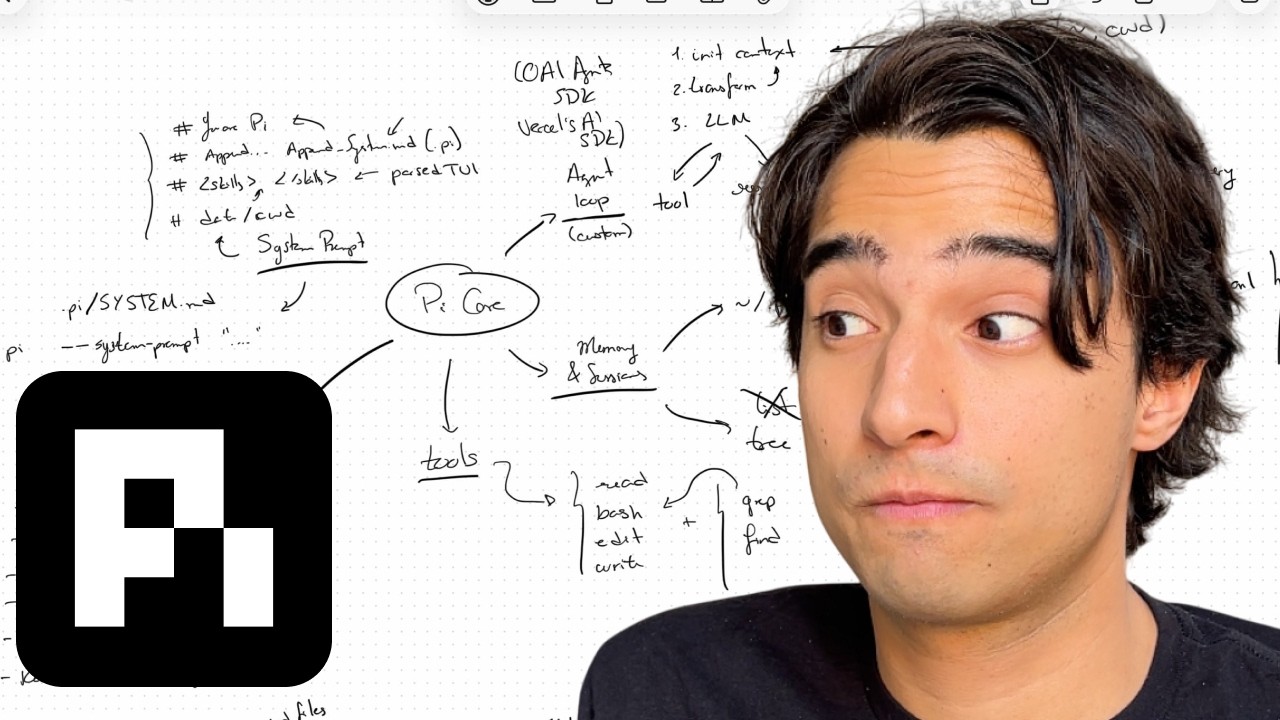
Pi Architecture Explained — Agent Loop, Tools, TUI and More

A deep walkthrough of Pi's internal architecture: the agent loop (context init → transformation → LLM call → tool loop), JSONL tree-structured sessions, the minimalist 4-tool design, TypeScript extensions, the ~20-line system prompt, compaction mechanics, and how skills use progressive disclosure.

deep-dives
Alejandro AO
Published2026-06-05

Build an AI Bookkeeper with Pi Agent Harness — ZazenCodes

ZazenCodes builds a complete AI bookkeeping agent from scratch using Pi as an npm dependency, the Pi SDK, Express, and Claude Code. Covers agent anatomy (harness/brain/skills), custom AGENTS.md + brain.md architecture, the Pi SDK createAgentSession for web integration, receipt image processing, agent memory, and guardrails.

deep-dives
ZazenCodes
Published2026-06-05

The Astro Team Secretly Built the Best AI Agent Framework

Flue takes Claude Code's agent harness and makes it 100% programmable — skills, tools, sandboxes in a few lines of TypeScript. Built on Pi by the co-founder of Astro, with an in-memory just-bash sandbox that runs thousands of agents for near-zero cost.

deep-dives
Hermes
Published2026-06-03

Pi Coding Agent Observability — HTML Specs with Gemini 3.5 Flash and GPT Image 2

Deep dive into Pi Coding Agent observability features, exploring HTML specs generation with Gemini 3.5 Flash and GPT Image 2.

deep-dives
Deep Dive
Published2026-06-01

oh my pi deep dive

Better Stack introduces Oh-My-Pi — an open-source agent harness built on Pi that treats your project as a living runtime. Features native LSP integration, IDE-level code intelligence, and architectural upgrades over standard CLI agents.

deep-dives
Published2026-05-30

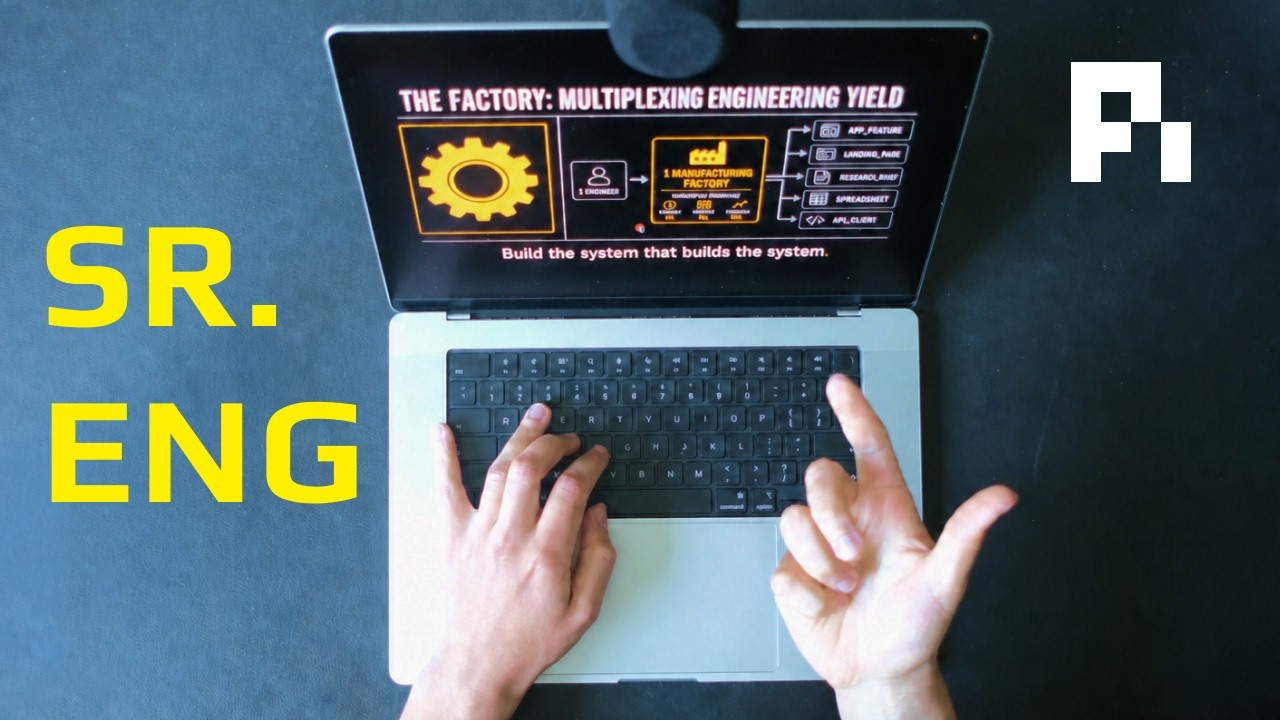
Top #1 Opportunity for Senior Engineers: Agentic Engineering — IndyDevDan

IndyDevDan makes the case that agentic engineering is the #1 opportunity for senior engineers — demonstrating custom agent harnesses built on the Pi platform that deliver capabilities impossible with out-of-the-box tools like Claude Code or Codex.

deep-dives
Published2026-05-25

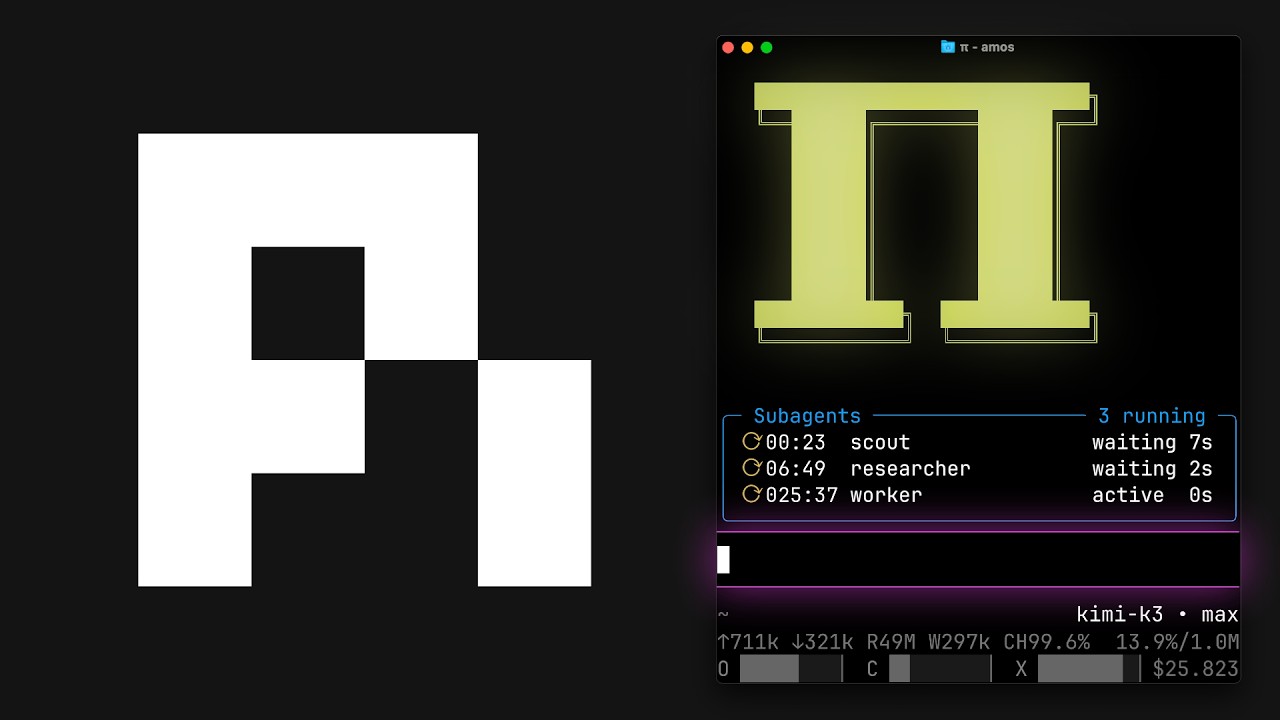
Simple Pi Subagents — Give Your Coding Agent Its Own Agents

A Pi extension that lets your agent spawn subagents in isolated contexts — Scout (Haiku, file exploration), Researcher (Sonnet, web search), and Worker (full coding capability). Each agent defined by a single markdown file. Configurable depth, nested tool call observability, and 6-level stress test.

deep-dives
Eero Alvar
Published2026-05-21

The REAL Reason Pi Is Better Than Claude Code or Codex

Ben Holmes zeroes in on Pi's killer feature: /tree — a conversation history system that lets you roll back to any point and branch from there. Unlike simple /fork commands, it enables non-linear exploration of implementation paths.

deep-dives
Editorial
Published2026-05-21

Setting Up Pi Subagents Because I Keep Doing 2 Dumb Things — Eric Michaud

Eric Michaud fixes two common Pi workflow anti-patterns — system prompt bloat and terminal tab explosion — by installing pi-subagents. He walks through built-in roles (scout, oracle, reviewer, planner), foreground vs background mode, async chains, Pi Intercom, and redesigning the main system prompt for lean orchestration.

deep-dives
Eric Michaud
Published2026-05-18

Pi to Pi — Two-Way Agent Orchestration with the Pi Coding Agent

IndyDevDan demonstrates peer-to-peer agent communication: agents as equals with bidirectional channels, cross-device prod/dev workflows with PII safety, E2B vs exe.dev skill mirroring via agent collaboration, and the four-tool A2A protocol. Flat hierarchies beat orchestrators when the best information wins.

deep-dives
IndyDevDan
Published2026-05-18

Pi is INCREDIBLE — Building a Custom Coding Agent Live

Cole Medin live-builds a custom Pi coding agent setup: configuring Kimi K2.6 as the model provider, installing marketplace extensions, loading Archon skills, and building a custom Archon Dispatch extension from scratch — all without touching Anthropic.

deep-dives
Cole Medin
Published2026-05-17

How I Turned Pi Into the Ultimate Coding Agent — Ben Davis

Ben Davis shares how Pi became his primary coding agent, replacing Codex and desktop apps. He walks through the extension system, his Cmux-based terminal workflow, custom extensions for web search, git, and background agents, and compares setups with Dylan Mulroy.

deep-dives
Ben Davis
Published2026-05-15

Pi Agent – Crash Course | Minimal Coding Agent — Alejandro AO

Alejandro AO walks through the Pi Agent harness from first install to full customization — model switching, prompts, skills, themes, context files, TypeScript extensions, community packages, and tree-based session management.

deep-dives
Alejandro AO
Published2026-05-06

Building Pi in a World of Slop — Mario Zechner

Mario Zechner's talk at AI Engineer Conference — a 'tragedy in three acts': why he left Claude Code for radical context control, how minimal harnesses outperform complex ones (Terminal Bench), Pi's self-modifying architecture with 4 tools and a system prompt that fits on screen, the war against AI-generated garbage in OSS, and a passionate plea to slow down before agents drown your codebase in enterprise-grade complexity.

deep-dives
Mario Zechner — AI Engineer Conference
Published2026-04-16

Pi Coding Agent: The only Agent That's Truly YOURS

Igor Kudryk makes the case for Pi Agent as the fully customizable alternative to Claude Code and Codex — with its minimal system prompt, YOLO mode, lifecycle-hook extensions, and a philosophy that puts the developer in complete control.

deep-dives
Igor Kudryk
Published2026-04-10